
Filteredwaterguide.com is supported by readers. If you purchase through referral links on our site, we make a commission at no extra cost to you. Learn more.
Whole House Water Filter Backwashing Guide
If you are one of the millions of people that have a whole house water filter installed on your incoming water supply line, then you are most likely enjoying drinking water that has been greatly enhanced.
You will also be doing this by having one of two types of whole house filters (also called point of entry, whole home, and media water filters).
One is a whole home filtration system that has several different types of filter cartridges working in series with each other and the other is a much simpler working backwashing style point of entry water filter.
It’s the latter that I want to go over with you today and more specifically how a backwashing whole house filter works, why this backwashing process is so important, and the pros and cons of having one of these impactful water filtration devices installed in your home.

Table of Contents
How Do Whole House Backwashing Filters Work?
Most quality whole home filters that have a backwash cycle do not actually filter out contaminants in a traditional sense.
That’s because many backwashing-style point of entry (POE) water filters will have filter media such as activated carbon and KDF-55 that absorbs impurities as opposed to ‘screening them out’.
This absorption process causes the media inside a whole home filter to start to become full of impurities. When this happens, your whole house filter will become less efficient at cleaning up your water and you may even see a drop in water pressure in your home.

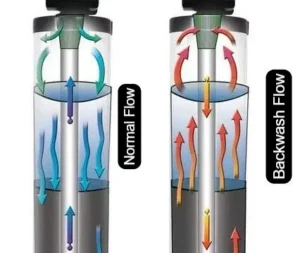
The only way to correct this is to run a backwash cycle. This is a cycle that causes water to flow in the opposite direction of the way that it typically does through a whole house filter.
When this happens, it causes a reverse agitation process that acts as a filter media cleaner.
Backwashing is needed to loosen the contaminants that have been absorbed by the filter media in POE filters so they fall off and go back into the water stream.
When backwashing, these particles will then be flushed out a drain port as opposed to going into your home’s water supply.
Once this process has been completed, your whole house filter will then once again be a very efficient water purification device.
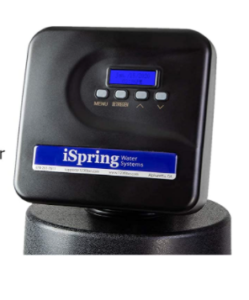
The even better news is that most media water filters will initiate this process automatically. They do this utilizing the electronic control head that sits on top of them.
They can usually be set using such parameters as to how many gallons of water has flown through them or they can be set to backwash in timed intervals such as once or twice a month.
These electronic control heads have taken the performance of whole house water filtration systems to a new level.
That’s because they better limit the amount of wastewater that they produce and they also keep your filter media working efficiently and greatly extend its useful life.
You must also be aware that not all backwashing style point of entry water filters have identical backwashing cycles.
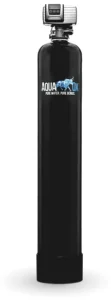
I will give you as an example one of the better backwashing type whole home filters that’s made, the Aqua Ox. Here is how the backwash cycle on the Aqua Ox RE Edition (removes iron and sulfur too) works:
- After the backwash cycle is first initiated (done automatically by the programmable control head), the unit will backwash the filter media for 14-minutes. At this time wastewater is produced and unfiltered water can be made available in the home.
- The system then performs an ‘air recharge’ for 40-minutes. This step enhances the filter media by oxidizing it and the amount of time that this backwashing step takes place can be controlled by the user.
- Next, a 1-minute rapid rinse takes place to restore the unit to its proper operating condition.
From start to finish, the backwashing cycle on this model whole home water filter is completed in less than 1-hour.
Why Is Backwashing Important?
The backwashing cycle on a whole home filter has three main purposes. These are:
- This process increases filtration space making sure that the efficiency of your filter remains high because more impurities can then be removed as the water passes through it
- It enables important aeration to take place which enhances the filtration process
- Backwashing protects against system water pressure drop
How Often Should Whole House Water Filters Be Backwashed
This is a tough question to answer because the amount of time between backwashing cycles is determined by several different factors.
The most influential of which are the different types of contaminants found in your incoming water (determined by home water testing), the concentration levels of them, the type of POE filter being used, and the sophistication of your whole home filter model.
Here are some rough ideas as far as backwashing frequency is concerned. Specialized whole house filters such as those that remove high concentrations of iron and Sulfur from well water may need to be backwashed as soon as every 3 to 4-days.
Activated carbon filters that are just being used to filter city water can go as long as 2-weeks before they need to have a backwash cycle performed inside them.
What Are the Common Types of Backwashing Whole House Water Filters?
As was mentioned, not all backwashing whole home filters remove the same water impurities. Here are some of the different types of point of entry water filters that are available:
Iron, Sulfur, And Manganese Filters
These are some of the most problematic impurities and they are most often found in worrisome levels in well water. More often than not, they use some form of catalytic carbon filter medium to remove the above-mentioned contaminants and many others too.
Granular Activated Carbon Filters
This type of POE filter uses a filter media that is known for its very high amount of surface and its excellent absorptive capability. It is very impactful when it comes to removing chlorine, chemicals, and pesticides along with removing sediment and organic matter.
Catalytic Granular Activated Carbon Filters
These whole house filters not only remove chlorine but they take it one step further and remove stubborn chloramines (formed when ammonia is added to chlorine water treatments) too. As was pointed out, they also offer superior iron, sulfur, and manganese removal from tap water.
Sediment Filters
Here are whole house filters that make use of smaller pore-sized alumina-silicate, crystal mineral media. This enables them to treat conditions that cause water turbidity (cloudiness).
That makes them very effective at removing silt, sand, and other granule-size solids along with many types of colloidal and soluble inorganic metallic contaminants.
Calcite Ph Neutralizer Filters
One of the most problematic water conditions that you can deal with is having a pH imbalance. This is particularly concerning when that pH imbalance is to the corrosive acidic side. These point of entry filters are designed to keep pH at more neutral levels (near 7.0) by adding calcite to your water.
Bone Char Filters
Chlorine is not the only concerning substance that’s added to tap water to enhance it. Another is fluoride which few whole house filters can remove. Those that do use Bone Char (select quality animal bones) as the filter media of choice to remove it.
It combines carbon filter media with an ion exchanging hydroxyapatite lattice surface area for efficient fluoride removal.
Pros and Cons of Backwashing Filters
Here are the good and bad traits of backwashing filters:
Pros:
- Backwashing extends the useful life of almost every type of filter media and will therefore extend the useful life of your whole-house water filter.
- A backwash cycle on a point of entry filtration system helps keep your whole home filter’s important media clean and working efficiently.
- Backwash cycles help encourage an optimal flow rate through your whole house filter at all times.
- Once installed, POE backwashing filters require very little maintenance to keep them working at peak efficiency.
- DIY installation of whole house water filters is very possible with even limited plumbing knowledge.
Cons:
- Whole home filters that need to be backwashed to keep them clean have a high upfront cost for the unit and installation.
- Backwashing whole house filters require a good amount of water pressure to work properly, so they do not work well if you have low-pressure city water or inadequate pressure from your well pump.
- They take electricity to operate which results in a slight increase in your electric bill.
- Most backwashing point of entry filters generate at least a small amount of wastewater.
Backwashing POE Filters Work as Well as Advertised
Without a doubt, I am a proponent of most people installing a whole home water filtration system. This is especially true for those that have well water coming into their homes.
The only exception is if you have higher quality city water (not all municipal supplied water is good) coming into your home.
But even then, you still want to install a good reverse osmosis system, countertop, or under the sink water filter to increase the healthiness of your drinking water.
That’s why if you do not currently have a whole house water filter, then I invite you to check out our reviews of some of the best whole house filters that are available in the marketplace.