
Filteredwaterguide.com is supported by readers. If you purchase through referral links on our site, we make a commission at no extra cost to you. Learn more.
Water Softener Repair and Troubleshooting Guide
In my 26-years of working around water filtration and treatment equipment, I have had to troubleshoot and repair some very complicated pieces of equipment. Trust me when I say that water softeners are not among them.
That means that I believe your water softener is a piece of water treatment equipment that is simple enough for you to easily understand how it operates and, in turn, do your troubleshooting and repairs on it yourself.
I would not go as far to say that you can do this without any sort of guidance. That’s why I have taken the time to put together this comprehensive water softener repair and troubleshooting guide.
It will teach you how to identify and resolve some of the most common problems that water softener owners run into. I have even included a water softener problem and repair overview table that will help simplify this process as much as possible.

Table of Contents
- Water Softener Problems + Fixes Overview Table
- What To Do If Your Water Softener Is Not Working
- Testing Your Water for Total Hardness
- Initial Water Softener System Diagnosis Steps
- Water Softener Troubleshooting & Repair 101
- Repair Companies and Costs for Repair
- My Final Thoughts on DIY Water Softener Troubleshooting and Repair
Water Softener Problems + Fixes Overview Table
Here is a table that will help you quickly identify any problems that you are having with your water softener and guide you as to how to best resolve them:
| Issue | Most Likely Cause | Resolution |
|---|---|---|
| Hard water still present in taps | Water softeners not functioning properly | Follow initial water softener diagnosis steps |
| Improper or No Regeneration Cycle | Broken/Misconfigured timer | Replacement or recalibration |
| Clogged injector/venturi, restricted drain hose/control | Remove obstructions from lines | |
| No or not enough water in the brine (salt) tank | Fill up the brine tank with salt ½ way and set the water level 2” to 3” below the top of the salt | |
| Salt Bridging/Salt Mushing | Drank the brine tank and gently clean it/add fresh salt | |
| Too much water in brine tank | Check for clogs in drain valves and feed lines, clean out salt bridges and clumps | |
| Dirty/worn out resin bed | Run additional regeneration cycle/replace old resin bead bed | |
| Softener is not using salt | Salt bridge or mushing | Drain and clean the salt solution tank – refill to proper level |
| Other Causes of no water or low water level in brine tank | Malfunctioning brine tank float switch | Adjust or replace the float switch |
| Clogged brine line/valve | Drain and clean the salt tank and pay close attention to the float switch area | |
| Brine tank is full of water | Salt bridges or mushing | Drain and clean the salt solution tank – refill to proper level |
| Defective or clogged float valve, injector, venturi port, or softener’s drain line | Replace malfunctioning parts or clean out clogs and restrictions | |
| Dirty or worn-out resin bed | System needs cleaning | Run 1 or 2 additional regeneration cycles, use resin bed cleaner to remove mineral buildup |
| resin bead bed has passed its normal useful life | Replace the existing resin beads with new ones | |
| Unit is leaking | Cracked plumbing fixtures, worn O-rings, or poor plumbing connections | Fix leaks or replace broken or worn parts |
| Cracked resin or brine tanks | Replace the leaking tank | |
| Dirty or brown colored water | Accumulation of iron or other impurities in the brine tank | Drain and clean the salt solution tank – refill to proper level, use pure salt |
| Low water pressure through the system | Water softener needs cleaning | Initiate manual regeneration cycle |
| Improper plumbing line sizing | Schedule professional help | |
| Control valve or brine tank clogs or defective parts | Perform water softener maintenance such as running a regeneration cycle, draining and cleaning the salt solution tank, and replacing broken parts as necessary | |
| Water is slippery or tastes too salty | System is retaining or adding to much salt | Adjust system control settings, check drain line for clogs and restrictions |
| Softener won't stop running | Clogged salt feed lines or resin tank injector | Drain and clean the salt solution tank and pay close attention to the feed lines and injector |
| Inadequate water pressure in the system | Needs to be addressed by a professional | |
| Blockages anywhere in the system | Initiate manual regeneration cycle, drain and clean the salt solution tank | |
| Unusual noises such as rattling, tapping, or banging sounds | Clogged tubing/valves | Run a regeneration cycle, drain and clean the salt solution tank |
| Worn out timer | Replace the timer | |
| Broken air valve | Air valve replacement | |
| Very high salt use | Improper System Settings | Adjust salt settings or regeneration cycle frequency |
| Overfilled salt solution tank | Drain and clean the salt solution tank – refill to proper level | |
| Yellow Resin Beads in Pipes and Water | Possible cracked riser tube basket or other cracked resin tank part | Replace the basket or other cracked part |
What To Do If Your Water Softener Is Not Working
I will start by saying that water softeners are pretty reliable water treatment systems. With a minimum of maintenance and annual cleanings, quality water softeners should last anywhere from 5 to 10-years.
If by chance that yours does stop working properly, then there is an initial protocol that you should follow to determine what’s wrong with water softeners.

You should also familiarize yourself with the salt-based water softener system schematic below which will help you identify critical parts used in these water treatment systems that are used to upgrade drinking water quality.

Testing Your Water for Total Hardness
If you suspect that your water softener is not producing soft water, a good way to tell if this is true is by measuring the total hardness of your water supply at your taps.
An easy way to test for hard water at home is by using test strips such as the JNW 15 in 1 Direct Drinking Water Test Strips.

If you don’t feel like testing your water for total hardness yourself, then professional lab testing is made easy by using a total hardness test kit such as the one made by Tap Score.
If either of these testing methods shows that the water coming out of your taps has a hardness level of 60 parts per million (or 60 mg/L), then your water softener system is not producing soft water and something is amiss.

Initial Water Softener System Diagnosis Steps
- Step 1: If your water softener has an electronic control head is it lit up and working? If not, check to see if it’s plugged in or the breaker feeding it is tripped.
- Step 2: Check to make sure that your system’s bypass valve has not been activated. This may seem like a silly step but it does happen.
- Step 3: Check the salt level in your brine tank and see if there are any abnormalities in the tank such as salt bridges.
- Step 4: like most newer water softeners, yours should have a programmable control head, double-check that its settings are right.
- Step 5: Check the water flow out of your taps. If it seems slow, run a regeneration cycle (refer to your owner’s manual) and also check the cleanliness of your salt solution tank and check the line that runs from it into your resin tank for obstructions.
- Step 6: It never hurts to run a regeneration cycle anytime that you find your softener’s control head is working but the unit is not lowering your incoming water’s total hardness level.
Water Softener Troubleshooting & Repair 101
Here are some common issues that impact water softeners and the solutions needed to resolve them:
1. System Does Not Regenerate
Performing the regeneration cycle (softener cleaning and replenishment cycle) is by far one of the most important steps your softener does in the water softening process.
If the special beads in the resin tank cannot be cleaned and recoated with the brine solution, then your water softener system will not work.
If your system cannot perform a regeneration cycle, then check the following:
- See if the system’s timer is broken or misconfigured.
- Check to see if the special injector or venturi port that lets the salt solution out of the brine tank and into the resin tank is working properly and not clogged up.
- Make sure the floor drain hose or pipe from the system is not blocked so much that flow through it is restricted.
- Ensure the salt solution tank has the proper amount of salt and water in it (the salt needs to be halfway up the tank and the water level 2” to 3” below the top of the salt).
- Open the salt solution tank and check for salt bridges (unsupported clumps of salt) and mushing (salt forms into a paste-like substance) and clean the tank if any of these are found.
- Make sure the resin bed is not extremely dirty.
- None or not enough water in the brine tank is a problem too.
2. Softener Is Not Using Salt
The brine mix in your system plays an important part in how your water softener works. That’s because it coats the resin bead bed to initiate the ion exchange process that makes your water softener work.
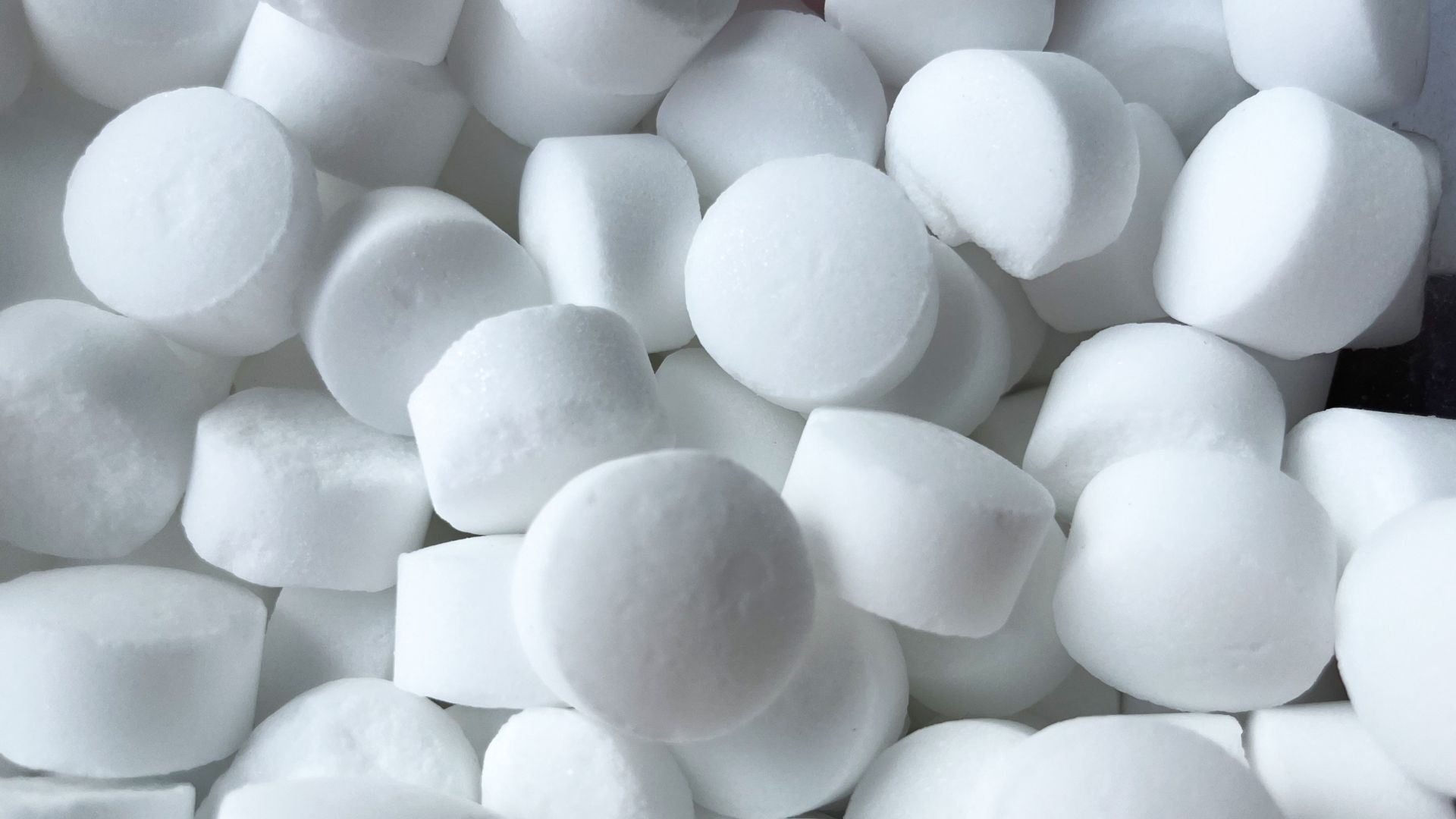
So, when no salt is being used, that’s a big issue because your softener will not function. Once again, when this happens, you will need to check your salt solution tank for salt bridges, mushing, and the proper salt and water level in the tank.
3. Brine Tank Full of Water
If you open up your salt tank and it’s filled to the top with water this is another problem that can be easily corrected. This is best done by completely emptying the salt solution tank of salt and water.
It may be the case where salt clumps or mushing have blocked the drain port on the salt solution tank. It can also be the result of a defective float valve or once again the special injector or venturi port on the brine tank being defective or clogged up.
4. Dirty or Worn-Out Resin Bed
The resin bead bed in your water softener is initially coated with the positively charged salt ions in the solution from the salt solution tank.
When hard water-causing minerals such as calcium or magnesium enter into the resin tank, these minerals have stronger positively charged ions than the salt does. So, they displace the salt ions and stick to the resin beads until they are flushed out of the system.
If these resin beads are dirty or worn out, then they cannot perform their function and must be cleaned. If that does not work, then resin replacement will become necessary.
5. Unit Is Leaking
Leaks on the system may or may not be able to be repaired by you. Those on plumbing lines or connections can usually be easily fixed with a little plumbing know-how.
The same cannot be said for leaks caused by cracks in the resin tank or the extremely fragile brine tank. These tanks would need to be replaced to stop a leak in most cases.
6. Dirty or Brown Colored Water
This happens when impurities in the salt or iron in the system get mixed in with the system’s salt bed. They tend to tint the water inside the salt tank. At this point, I would recommend draining the salt solution tank and then replacing the salt inside the tank.
Be sure to refill with pure salt and avoid using standard rock salt.
7. Low Water Pressure-Causes
Most pressure-related problems in your water softening system stem from resin bead bed issues such as them being dirty or worn and clumping too closely together. If a regeneration cycle does not resolve the issue, then simply replace the resin bead bed.
System pressure issues can also be caused by improper system sizing, control valve clogs, or other performance issues. You would probably need professional water softener repair services to correct improper system sizing issues.
8. Water Is Slippery or Tastes Too Salty
This will most likely mean that your water softener is using too much salt. To correct this, you simply have to adjust your control settings. A partially clogged drain line can also result in a stronger salt solution being present in your water softening system.
9. Softener Won’t Stop Running
A regeneration cycle on most water softener models will only take an hour or so to complete. So, if your system is constantly stuck in regeneration mode this is not good. This happens for the following reasons:
- Salty water from the brine tank cannot be drawn out because of clogged feed lines or injectors
- Inadequate water pressure in the system
- Blockages anywhere in the system
All of these issues except the water pressure through your home’s plumbing can usually be corrected with DIY water softener system maintenance.
10. Noises
You may hear some strange noises coming from your water softener. This can be something as simple as the sounds of water going through bends in piping which is nothing to worry about.
More of a concern is rattling, tapping, or banging sounds inside of the system. These are usually caused by:
- Clogged tubing/valves
- Worn out timer
- Broken air valve
11. Very High Salt Use
Problems of this nature can usually be traced back to the control system. They could include improper salt settings or regeneration cycles being programmed in too frequently. This can also result from having too much water in the salt solution tank.
12. Yellow Resin Beads in Pipes and Water
This is a sign of a catastrophic failure inside your resin tank. You will have to drain your resin tank to figure out where the problem is. Most often this results from a crack in the mesh basket that is located at the end of the riser tube.
To let decent-sized resin beads out, the crack in a part will have to be obvious. So, identify that cracked part and replace it.
Repair Companies and Costs for Repair
If you do decide to initially hire a technician to repair your water softener or you fail in your attempt to fix it yourself, then of course you will be charged an hourly rate for your water softener repair and the cost of any parts that they need to replace.
Hourly rates for plumbers or water treatment equipment technicians will run anywhere from $50 to $100 an hour with an average labor cost for a repair coming in at around $150 to $200. Most water softener repairs can be done in under 2-hours.
Since hourly rates for water softener repair technicians vary so widely, as for a quote over the phone and get one more than one estimate for the repair.
My Final Thoughts on DIY Water Softener Troubleshooting and Repair
As I mentioned in my introduction in this article, I do not believe that a water softener is a very operationally-complicated type of water treatment equipment.
That means I do not feel that anyone with even a minor amount of mechanical ability and the right toolset will have problems troubleshooting and repairing a majority of issues that happen to them.
If you follow this guide, it all comes down to the comfort level you have with any type of water softener problem that you have identified in the chart and found the correct repair solution for.
When you look at this repair solution and have confidence that you can make a water softener fix yourself, then go ahead and try. If you are totally confused by what you are reading as far as a water softener repair is concerned, then call a plumber or water treatment equipment specialist for help.
It really is this simple when it comes to troubleshooting and repairing your water softener in most instances.