Filteredwaterguide.com is supported by readers. If you purchase through referral links on our site, we make a commission at no extra cost to you. Learn more.
GE vs Whirlpool Water Softener
Shopping for the best water softener does not have to be a daunting task despite the variety of options at your disposal.
In this guide, we are comparing the GE vs Whirlpool water softeners to help aid in your buying decisions.
That way, you can make comparisons and find the best water softener for your home.
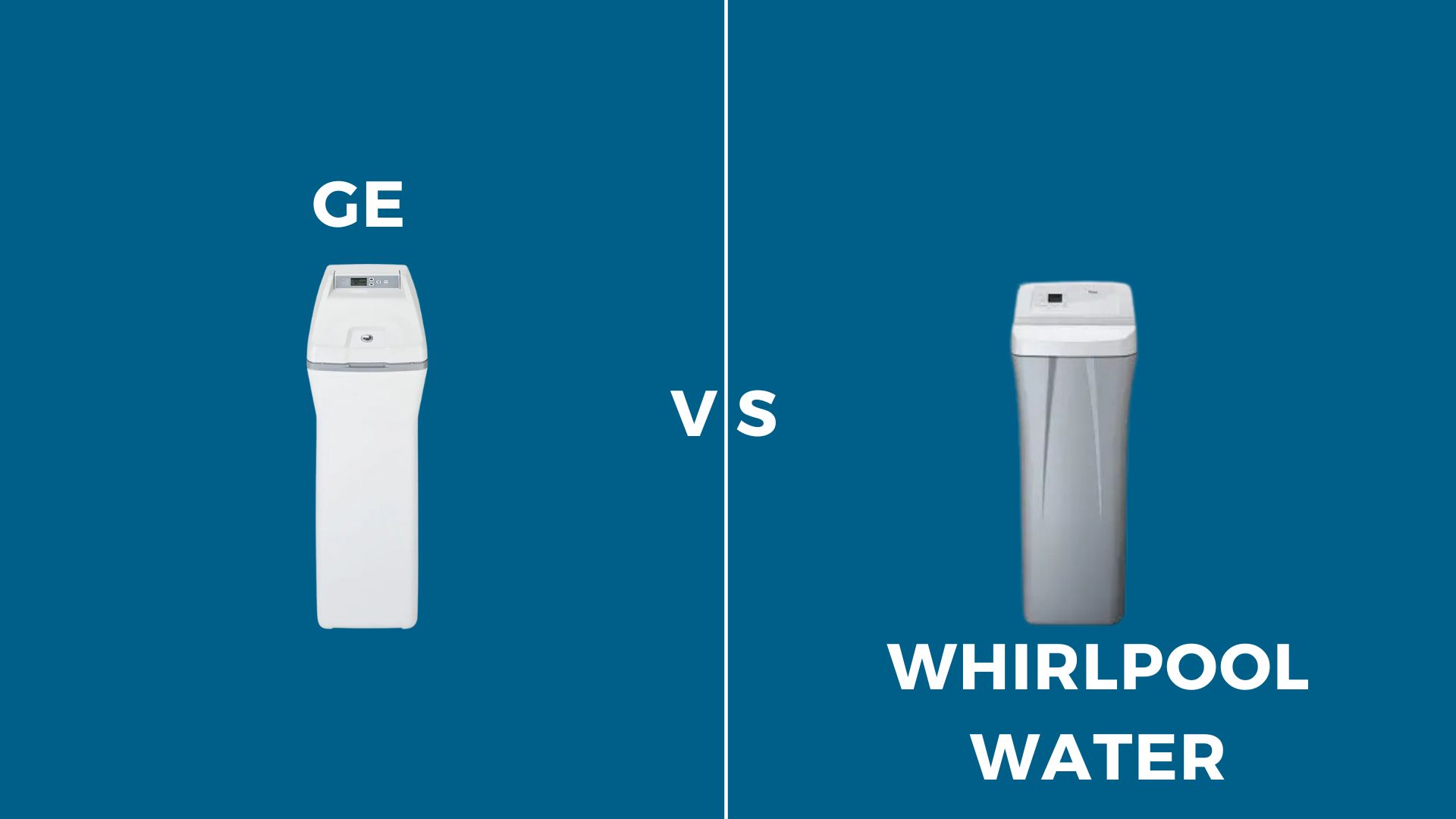
GE vs Whirlpool Top Models Compared
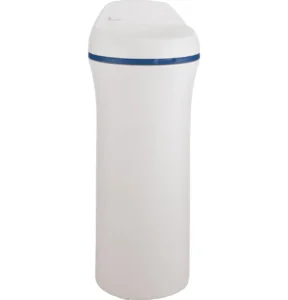
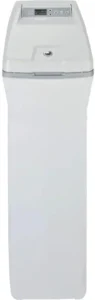
GE 30,000 grain
- Dimensions: 22.5 x 14.4 x 43.2 inches
- Flow rate: 7.5 gallons per minute
- Maximum hardness removal: 95 grains per gallon
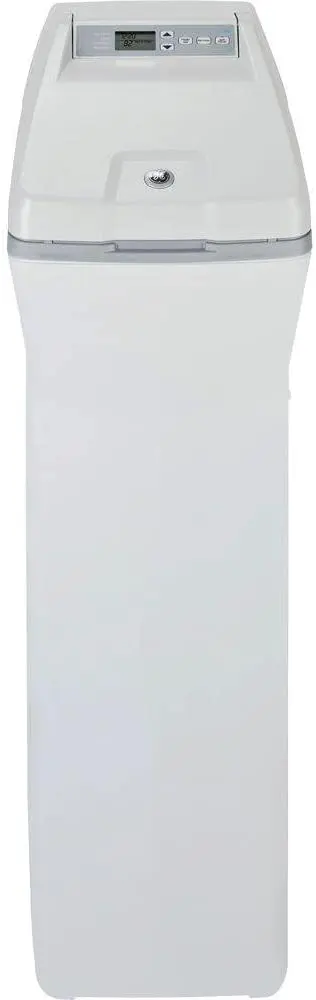
GE 40,000 grain
- Dimensions: 23 x 48 x 14 inches
- Flow rate: 9.5 gallons per minute
- Maximum hardness removal: 95 grains per gallon
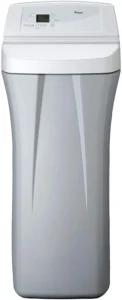
Whirlpool 30,000 grain
- Dimensions: 19 x 18 x 43.5 inches
- Flow rate: 7.6 gallons per minute
- Maximum hardness removal: 95 grains per gallon
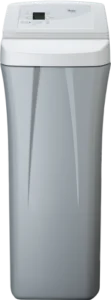
Whirlpool 40,000 grain
- Dimensions: 19 x 18 x 48 inches
- Flow rate: 8.5 gallons per minute
- Maximum hardness removal: 125 grains per gallon
The dimensions and weight of the water softener matter because you want to ensure this unit lasts the longest, has optimal water pressure, limited water usage, how much salt it uses, and ensure you have soft water all the time. If you choose a water softener that is too small, then it must regenerate more often. As a result, that causes the parts to wear out quicker. A unit that is too small could also result in unsatisfactory water output.
The unit’s flow rate is closely related to its dimensions and weight regarding the importance of not under-sizing. A water softener’s flow rate measures its water usage using gallons per minute. So, if you have multiple fixtures using the water softener simultaneously, an under-sized unit cannot produce optimal flow rates. Therefore, you are going to see a significant reduction in water pressure as water softening occurs.
Next, think about all of the appliances you’ll need water to flow through in your home. Several examples include coffee makers, dishwashers, plumbing fixtures, washing machines, and water heaters where you want to have the best water. You can prolong the life of these appliances by ensuring the water softener you choose has a high hardness removal to get rid of all of the hard water. By taking this into consideration, it is possible to expand the lifespan of these appliances by ensuring build-up is not occurring.
Based on the chart above, the Whirlpool 40,000 grain water softener is the best out of the water softeners regarding maximum hardness removal. If the unit’s flow rate is a priority, then the GE 40,000 grain water softener is a clear winner.
About Whirlpool vs GE water softener
GE Water Softeners
With its headquarters in Lafayette, Kentucky, GE makes it its mission to provide appliances to consumers for more than 125 years. This brand name continues to innovate solutions throughout the world, including having research and development centers in China, India, Korea, and the United States.
GE currently offers five water softeners on their website. These include the GE® 31,100 Grain Water Softener and Filter In One, GE® 45,100 Water Softener, GE® Smart 40,000 Water Softener, GE® 40,000 Water Softener, and GE® 30,400 Water Softener. The prices for these models range between $399 and $799.
In this market comparison, we are focusing specifically on:
GE 30,000 grain
Pros
- The system is demand-driven
- Helps you save money while simultaneously benefiting the environment
- Has SmartSoft technology, which means it learns your habits during the initial first few months of use
- Limited one-year parts warranty
Cons
- Some consumers found the installation instructions difficult to follow
- Not all leaks and breakage is covered by the warranty
GE 40,000 grain
Pros
- Digital controls mean straightforward and easy setup
- Efficient metered regeneration for the brine tank
- Uses SmartSoft technology to learn usage
- NSF certified and has a limited one-year warranty on parts
Cons
- Some consumers had difficulty with customer service
- Other consumers had issues with malfunctioning systems
Whirlpool Water Softeners
Over 100 years ago, Whirlpool launched as a machine company. Since then, this brand name has grown to become one of the leaders in the home appliance industry. The company introduced its first wringer washing machine in 1911 and, during the 40s and 50s, it supplied components to military aircraft.
The company has many water softeners available online. They include the Whirlpool 48000-Grain Water Softener, Whirlpool 44000-Grain Water Softener, Whirlpool 33000-Grain Water Softener, Whirlpool 30,000 Grain Water Softener, and Whirlpool 40000-Grain Water Softener. The prices for these models range between $475 and $595.
In this comparison, we are focusing specifically on these units to help narrow down which water softener is the best:
Whirlpool 30,000 grain
Pros
- The softening process does not leave any traces of minerals
- Uses 6th sense technology to minimize salt use from the brine resin tank
- Ideal for households with between one and four occupants
- One-year parts and labor warranty
Cons
- Not ideal for homes with more than four occupants
- Some consumers complain about the product’s quality
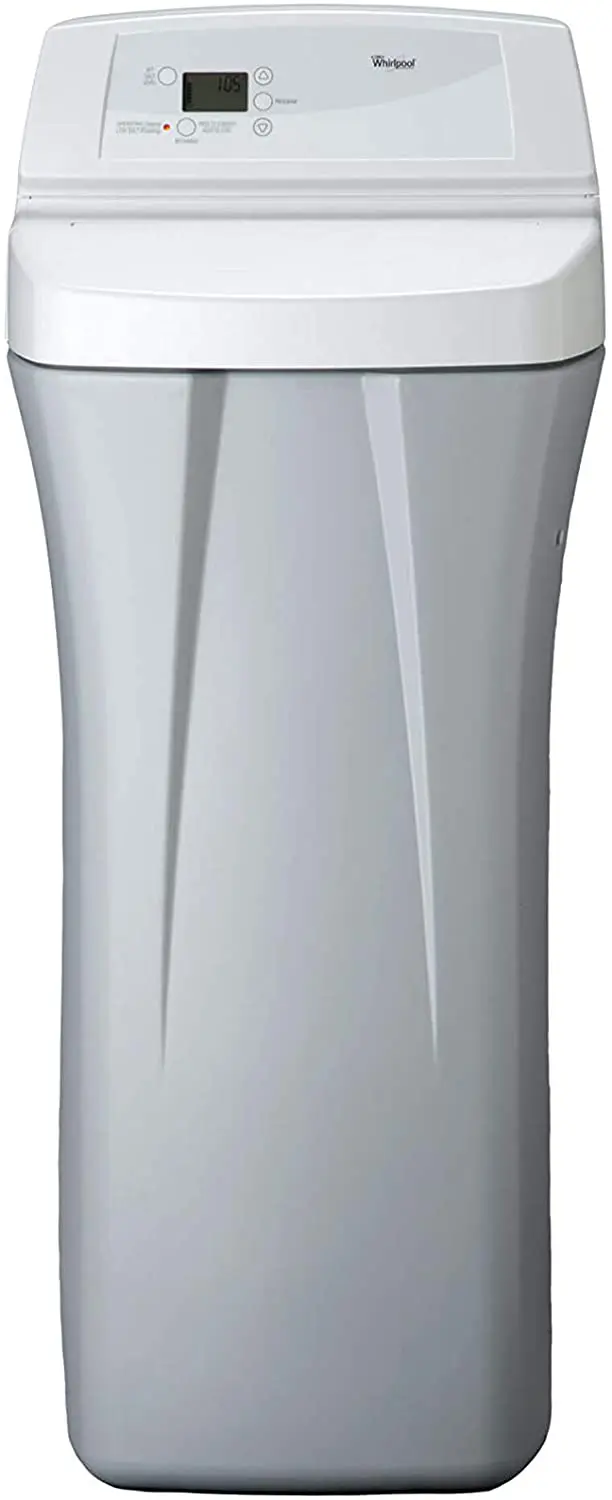
Whirlpool 40,000 grain
Pros
- Grain capacity for households with between one and six family members
- Automatically calculates how much salt and water necessary for regeneration in the brine tank
- NSF certified
- One-year warranty for parts and labor
Cons
- Ferrous levels cannot exceed 10PPM if using a well
- Some consumers complain about its lack of durability and poor quality
Stand out features
GE Water Softener Features:
- Conserve: Saves on energy, salt, and water by using half the amount of dishwashing and laundry detergent
- Customize: Blending valve allows users to customize the soft water output
- Ease of use: Easier to pour salt into the water softener thanks to its angled lid
- Self-cleaning: Protect your home’s appliances and plumbing thanks to the self-cleaning sediment filter
- SmartSoft technology: this water softener learns the household’s water use patterns
Whirlpool Softener Features:
- Demand-initiated regeneration cycles: This means that the regeneration process begins when water softeners measure the amount of water it is using and prevents wasting water and salt
- 6th sense technology: Means you are using less salt from the brine tank
- Low salt indicator: This helps you determine if you need to add more salt or not
- Space-saving single tank design: These designs are important for those who want to have the best water, but have space limitations
- Retains memory after power outages: You do not have to worry about whether or not your unit is producing the best water after a power outage because it retains its memory
An Alternative to GE & Whirpool
Figuring out which water softener is best means you may need to look at competitors. The best water softener should eliminate hard water, make sure you have soft water all the time, and do so without using a lot of salt when water softening.
Below is our recommended salt and salt-free softener brand that has consistently been rated as one of the top brands on the market in the softener business. We highly recommend checking out Springwell compared to GE or Whirlpool.
Springwell (Our Top Recommendation)

Like the competing brands, Springwell offers a salt and salt-free system. It doesn’t matter if you need to treat well water or public water supply; these systems are designed to control the calcium, magnesium, and other water issues. These systems are a good option if you would like your appliances, and plumbing to last longer.
The salt-free FutureSoft system does not require chemicals and you’ll find that it also doesn’t need maintenance. Make cleaning easier while simultaneously removing scale. These environmentally-friendly tanks range in price between $1,340 and $2,230.
If you prefer a salt-based unit, SpringWell’s salt SS1 system works efficiently with far less waste than older models. This system has a resin tank where a sodium solution wash occurs. From there, the solution moves into the brine tank. Depending on the hardness level of your water, the system uses a certain number of grains to regenerate automatically. That means that the process removes hardness from resin beads before resetting them with sodium. Prices for these units range between $1,230 and $1,412.
Conclusion
Finding the best water softener product requires a little time, patience, and researching through water softener reviews. While your goal is to have the best water flowing through your appliances and plumbing, the best water softener is also going to make sure you are not wasting energy, salt, or water.
Honestly, GE and Whirlpool water softeners are not the best brands on the market. We would recommend the Springwell FutureSoft or salt-based system above as our top recommendation.

AUTHOR
David Trinh
David is an expert in all things plumbing, heating, cooling, and water treatment. He got his start in the plumbing business working on fixing all types of home improvement issues including water leaks, broken toilets, appliance installation, and more. Over time, he learned a ton about installing and choosing the correct water treatment products for homeowners.