Filteredwaterguide.com is supported by readers. If you purchase through referral links on our site, we make a commission at no extra cost to you. Learn more.
Home » Water Filtration Systems » Best Sulfur Filters For Well Water – Best Sulfur Water Filtration System Reviewed
The overwhelming sulfur smell in your shower is not just a coincidence.
The source of this unpleasant odor may be coming from well water that contains high levels of hydrogen sulfide, which has an unforgettable rotten eggs flavor when it comes to drinking water.
This gives your water an unpleasant taste, but it can also corrode metal pipes and tarnish silverware. Sulfur in water can also cause yellow or orange staining on your laundry and fixtures.
If you’re ready to get rid of that obnoxious smell once and for all, then you need good water filtration equipment for your home.
Here are the best sulfur water filter systems that we’ve found to remove hydrogen sulfide from your water table supply and give you clean, great-tasting water again.




If you have high hydrogen sulfide content in your incoming tap water, I don’t think that you can go wrong by purchasing any of the best sulfur water filter systems on this list to correct that issue.


This is a nicely designed and highly rated sulfur filter. Its main purpose is to treat incoming well water for problematic sulfur, iron, and manganese.
This sulfur water filter system does a very good job at this and getting rid of the rotten egg smell that goes along with sulfur in water conditions.
That’s why this whole house water system is easily our top choice for reducing hydrogen sulfide content in your home’s water.
It combines a 4-stage filtration process with advanced air injection oxidation. The SpringWell Whole House Well Water System also has a very constant flow rate and is built tough.
Although this water purifier’s initial cost is somewhat high, you shouldn’t overlook the fact that it does a great job reducing sulfur in the water, is virtually maintenance-free after the initial setup, and has a Bluetooth control head so it can be remotely operated.
This whole house water system is designed to last 20+ years and is also backed up by an outstanding satisfaction guarantee and warranty.

If you’re in the market for a comprehensive solution to treat your well water, the RKIN Whole House Well Water Filter System is a top contender. Designed specifically to tackle iron, sulfur, and manganese, this system promises to deliver clean and safe water throughout your household.
The system boasts a multi-stage filtration process that ensures the removal of a wide range of contaminants. Its combination of filters, including an air pocket, greensand fusion, and an Enpress® Vortech distribution system.
With a flow rate of 12 gallons per minute, the WF10 model is suitable for homes with up to 3 bathrooms, ensuring consistent water quality throughout. For larger homes, RKIN offers a WF13 model, good for 4+ bathrooms and a 20 GPM.
The manufacturer backs this product with a lifetime warranty and an unmatched one-year satisfaction guarantee.
However, quality comes at a price. The RKIN Whole House Well Water Filter System is on the higher end of the price spectrum. But for those who prioritize water quality and are willing to invest in a long-term solution, this system is worth considering.

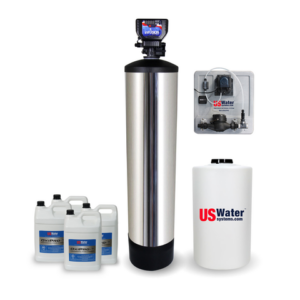
This sulfur treatment filtration system is unique because it uses a combination of chemical injection and filtration system rather than a completely self-contained oxidation tank system.
This has proven to be a very effective way to eliminate sulfur (hydrogen sulfide) from incoming well water.
It will also remove significant amounts of iron and manganese. Other features include a control head that can be programmed using an app on a smart device, a 15-gallon peroxide tank, and a precision injection panel.It has a decorative and durable stainless-steel tank that can remove sulfur from water in homes with up to 4 bathrooms. It offers the convenience of being a maintenance-free well water treatment system.
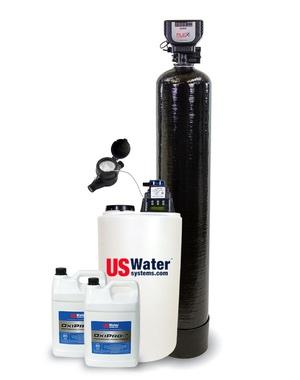
The Flexx inFusion Iron and Sulfur System is a residential-grade water filtration system designed to combat issues like hydrogen sulfide (rotten egg odor), iron, and manganese in your water supply.
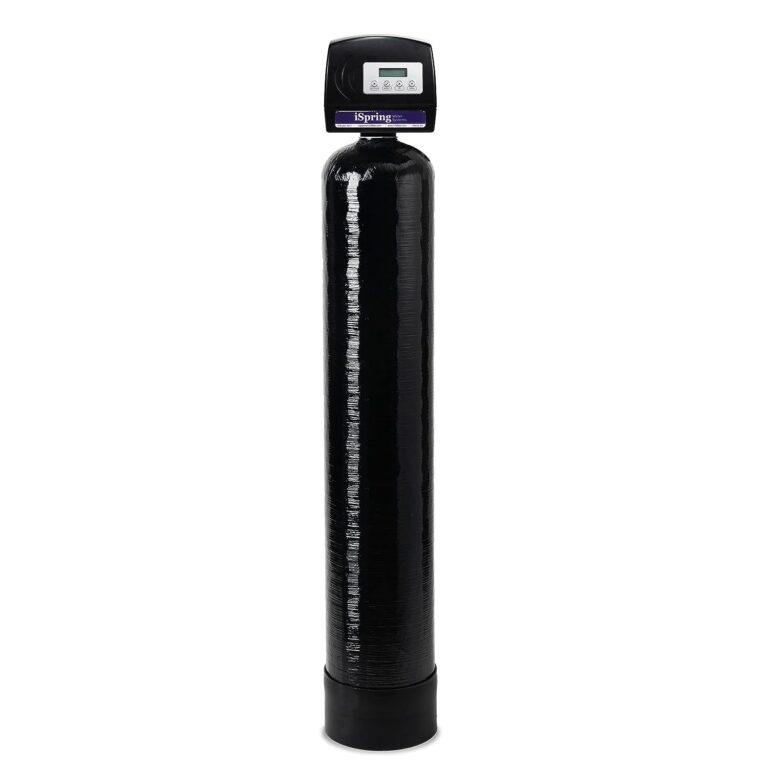
The iSpring WCFM500K Whole House Water Filter is designed to provide clean and safe water from every faucet in your home.
It effectively reduces iron (up to 12 ppm), manganese, and hydrogen sulfide (up to 20 ppm), as well as solids and turbidity with its 3-micron sediment filtration.
Here are the traits of the best hydrogen sulfide filter system that you should key on when shopping for one of these filtration systems:
The water purifier works by removing hydrogen sulfide and sulfur-consuming bacteria, which cause sulfate-related issues in tap water. Most water filtration systems work very straightforwardly and do not require ultra-sophisticated processes.
Sulfur water filters may also eliminate or reduce other tap water contaminants too. The more, the better, and this can be a deciding factor in your purchasing decision of a whole house water filter. For example, most catalytic carbon filters can remove chlorine, and more from water but not all water filters are created equal.

You certainly will want to know how easy the sulfur lowering system that you are thinking about purchasing is to set up, operate & clean, and what other types of regular maintenance it needs.
This includes a device with such features as a remotely programmable control head.
While it’s true that you need to remove problematic hydrogen sulfide from your incoming water, you don’t want to sacrifice a huge amount of water pressure in your home to accomplish this.
Ensure that you know the working flow rate of any sulfur filtration system you are thinking about buying so that it doesn’t affect your water pressure.
The chances are that you will be installing your whole house water system in a garage or basement. These are generally tough working environments for equipment.
That’s why you want your water systems that eliminate sulfur to have a tank that does not dent easily and is made using corrosion-resistant parts.

Warranties and guarantees are also a nice little bonus that can impact your sulfur water filter purchasing decision. The better the warranty/guarantee, the more it indicates that a manufacturer has much confidence in their product being able to do what they claim it can.
Not many of us have unlimited budgets when it comes to installing specialized equipment around our homes. So, the purchase price always has a role in choosing the best sulfur water filtration system that removes or reduces hydrogen sulfide.
Here is some good information to know before you start shopping for hydrogen sulfide treatment equipment.
Many people do not realize that sulfur is actually a non-metallic element that has its own place on the periodic table.
It’s naturally occurring and is often present in rocks, rock layers, and areas that have had previous volcanic activity.
This element is also an essential compound that’s found in every living cell.

Although the CDC considers sulfur in water to have low toxicity, it still can contribute to such health issues as dehydration, diarrhea, and eye irritation. High sulfur concentrations in tap water can also cause that water to be a skin irritant, so it is important to filter sulfur out of house water.
It’s also not good to breathe large amounts of hydrogen sulfide, so you shouldn’t expose yourself to the sulfur smell for long. Good sulfur filter systems can eliminate this problem altogether.
Getting rid of the sulfur in your water will also prevent scale buildup on pipes. That’s necessary because this buildup which contains trace metals, will eventually find its way into your body when it comes loose and goes back into the water supply.
This is why I will always recommend purchasing a sulfur removal system if you have any form of this element present in your water to get pure, filtered water to avoid health issues and eye irritation.
As was mentioned, sulfur is often present in rocks and rock layers. It can end up in water table sources through chemical reactions that take place with soil, rocks, and coal deposits.
Sulfur-consuming bacteria that like low oxygen environments are found in groundwater, wells, and plumbing systems. These can also introduce hydrogen sulfide into your drinking water source.
Both lab and home testing can determine if you indeed do have sulfur water.
The Health Metric Well Water Test Kit is one of the simpler ones to use to detect the presence of hydrogen sulfide in your household and drinking water.
Our Best Water Test Kits article can read more details on this test kit and other reliable water testing options.
Seeing what contaminants you need to remove from your incoming water will help you better identify the water systems that eliminate hydrogen sulfide that should interest you.
It’s also never a bad idea to know what other organic matter and contaminants are lingering in your water supply too. That will also help you determine what water filtration system best meets your iron and sulfur removal needs.

Granulated activated carbon filters and reverse osmosis systems are the only types of filters that can eliminate sulfur from tap water, but neither of these is considered to be reliable and effective on its own.
A hydrogen sulfide water filter is often combined with oxidation or chemical injection equipment to make it easier for them to eliminate sulfur and hydrogen sulfide from drinking water. It then makes it easier for an activated carbon filter to do its job. Try to stay away from water filters that use the poisonous substance potassium permanganate.
The rotten egg smell in water is caused by hydrogen sulfide gas. This is produced by the various types of bacteria that feed on sulfur that are often present in well water.
No, because oxidation or chemical injection is required, and most typical water filtration devices do not have that capability. So you need a special water filtration system to do this task.
Yes, but perhaps it’s better to ask why you would drink water with hydrogen sulfide content in it. Although it’s considered safe to drink, it may cause some minor digestive system problems, and its smell and taste may not make your water desirable to consume.
No, because an ordinary carbon-based water filter cannot remove the hydrogen sulfide smell, which is the source of the rotten egg smell in tap water.
So an activated carbon filter alone will not get you odor-free water. A water filtration system that uses oxidation or chemical air injection is best.
If your cold and hot water both have a rotten-egg odor, it’s most likely because of hydrogen sulfide in your water supply. The bacteria use the septic tank’s contents as a source of food and, in so doing, produce hydrogen sulfide gas.
A standard well water filter requires more maintenance because you will have to replace the filters while a system with air injection oxidation requires little maintenance and works great on well contaminants.
Even after experiencing just a few times the effects of smelling hydrogen sulfide in tap water and how it impacts water’s taste, that’s enough for me never to want to deal with the problems that sulfur in tap water causes.
Yes, I realize that the presence of sulfur in water does not cause serious health issues and the systems that remove it are expensive to install.
However, I still believe the drawbacks to sulfur-laden water far outweigh the investment that is necessary to get water filtration systems that eliminate hydrogen sulfide.
This is especially true if you buy a system that removes many other harmful contaminants in the water that you and your family drink every day.

15657 N Hayden Rd #1162
Scottsdale, AZ 85260
United States
602-780-2598
© Filtered Water Guide
Filtered Water Guide is a participant in the Amazon Services LLC Associates Program and other partner programs, which are affiliate advertising programs designed to provide a means for sites to earn advertising fees by referring users to merchant stores.