Filteredwaterguide.com is supported by readers. If you purchase through referral links on our site, we make a commission at no extra cost to you. Learn more.
After testing and reviewing all the salt-free water softeners on the market to eliminate hard water problems, we decided that the following units were best based on hardness removal capability, flow rate, and brand quality factors.
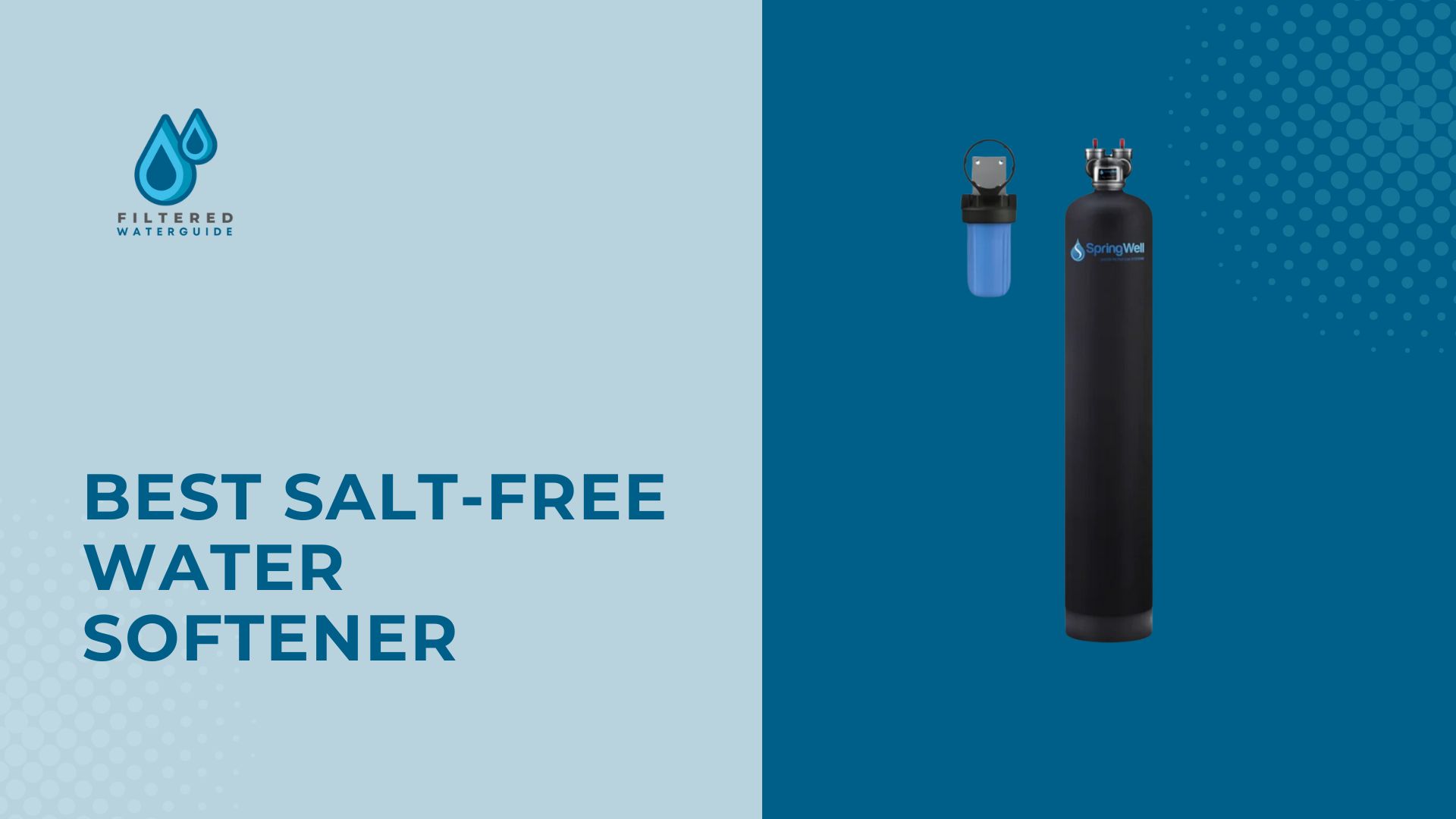
When looking at salt-free water softeners on the market, it can be hard to know which is best for your home.
Some salt-free systems will spare water pressure, while others will work better with naturally less hard water.
Some salt-free water softeners come with carbon pre-filters that reduce other contaminants and condition your water; some will need to be replaced sooner.
When picking the best no-salt water system, ensuring it will work as effectively for your home as a traditional salt-based water softener is critical.
We tested and reviewed all the top water softeners on the market, evaluating them based on the most important criteria: hardness removal capability, the process used to prevent scale formation, flow rate, and brand quality.
The following reviews and guide are our top recommendations to help you choose the best no-salt water softener for your home’s needs with minimal scale and pure soft water.
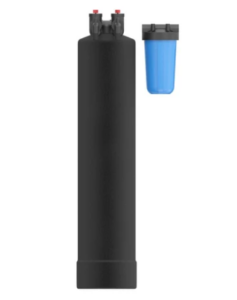
| Product | Springwell Futuresoft | SoftPro Elite | USWS Greenwave | EVO Water E-2000 | Aquasana Salt Free | APEC Futura Salt Free | Filtersmart FS500 | Eddy Electronic Descaler |
|---|---|---|---|---|---|---|---|---|
| Rating | 1 | 2 | 3 | 4 | 5 | 6 | 7 | 8 |
| Process | TAC | NAC | NAC | TAC | NAC | TAC | TAC | Electromagnetic |
| Max Hardness | 81 GPG | 17 GPM | 81 GPM | 75 GPM | 25 GPM | 25 GPM | Doesn't say | 20 GPM |
| Flow Rate | 20 GPM | 12 GPM | 25 GPM | 15 GPM | 7 GPM | 10 GPM | 15 GPM | 10 GPM |
| Warranty | Lifetime | Lifetime | Lifetime | Lifetime | 6 years | 10 years | Lifetime | Lifetime |
| Price | $$$$ | $$$$ | $$$$ | $$$ | $$ | $$ | $$$$$ | $ |
After conducting extensive research and using the criteria above, we created this review of the top 8 whole house water filtration systems for well water.

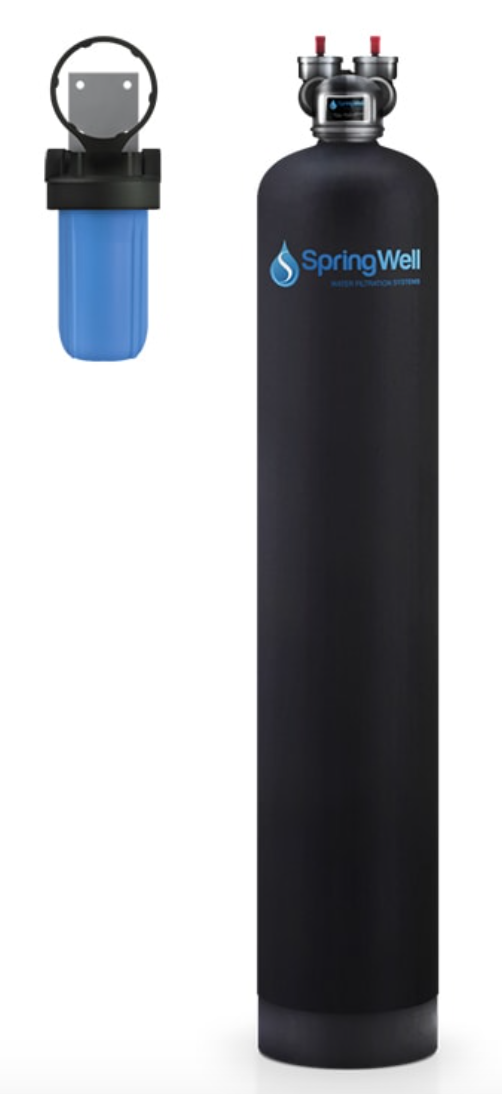
We rated the Springwell Futuresoft as our top recommendation because of its impressive hardness capability at 81 GPG and optimal flow rate at 20 GPM. This water softener can compete even with salt-based units, and Springwell offers a lifetime warranty.
There are many reasons why this is our top pick for the best no-salt water softening system.
It prevents an impressive amount of scale buildup without compromising flow and works in areas with very hard water.
Many other reviews also list the Springwell FutureSoft as the top soft water system.
Like many other softeners in our top picks, this system uses Template-Assisted Crystallization (TAC) technology.
This process takes the hardness-causing minerals in your water, like calcium and magnesium, and converts them to crystals that won’t stick to your plumbing, appliances, etc. – which means they won’t form scale.
Below are the main features that make this unit a great choice:
See our Springwell Futuresoft Review or Springwell Review for more information.
Quality Water Treatment’s SoftPro Elite is our runner-up pick because of its quality scale reduction, affordable price, and minimal maintenance required to operate the unit. It doesn’t have the capability that the Futuresoft or USWS models have, but it’s a good bang for the buck.
The SoftPro Elite saltless water softener removes 99.6% of scale formation without needing salt or electricity by neutralizing hard water minerals. It’s also eco-friendly, producing no water waste.
It uses scale control technology to neutralize minerals like calcium and magnesium in your water supply, turning them into crystals so they don’t stick to your appliances.
This water softener is best for homes with 1-5 bedrooms with a hardness level of up to 17 GPG. It’s not quite as effective as Springwell’s model, but it’s a great budget option.
It also comes with a lifetime warranty and a 6-month money-back guarantee.
The main features we liked about this product are:
See our SoftPro Elite Water Softener Review for more information.
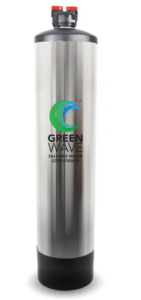
US Water Systems is a top brand in the water treatment industry. This no-salt softener has a whopping 81 GPG hardness capability while boasting 97% effectiveness in removing scale formation.
Due to this large capacity of changing hardness-causing minerals while maintaining a great flow rate, we think this is one of the best water softeners on the market.
If you’re looking for a no-salt water conditioner with the largest capacity to change hardness-causing minerals while maintaining a great flow rate, then the Greenwave from USWS is your best bang for the buck.
The Greenwave uses nucleation-assisted crystallization (NAC) to change the structure of hardness-causing minerals into tiny micro-crystals that prevent scale formation on household appliances.
This system can treat water with up to 81 GPG hardness, which is on par with a salt-based water softener.
Alongside the ability to prevent scale, this system maintains an excellent household water flow rate of up to 25 GPM. This means the system won’t cause a drop in your household water pressure when installed.
The main features we love about this conditioner are the following:

We like the Evo E-2000 as an alternative to tank-based conditioners and water softeners. It uses cartridges instead of a tank to minimize scale and is an affordable, easy-to-install water conditioner that works effectively.
The Evo E-2000 is a cartridge-based water conditioner that offers an alternative option to other tank-based systems.
It contains two cartridges- a sediment filter and a TAC cartridge- the sediment filter removes any sediment, such as rust, sand, silt, or clay. The template-assisted crystallization cartridge works to change the structure of hardness-causing minerals like calcium and magnesium.
The benefit of having a cartridge-based system compared to a tank is that it takes up less space and doesn’t need to backwash or require cleaning a tank. This salt-free water system looks more like a whole-house water filter since it has cartridges and is easier to install than tank-based systems.
It has a 75 GPG hardness capability which means that it can prevent scale formation in water with up to 75 grains per gallon while offering a flow rate of 15 GPM, which is pretty solid compared to other competing models.
Lastly, we think EVO Water Systems is a quality brand with good customer service. They offer a 120-day satisfaction guarantee on the E-2000 water softeners and a limited lifetime warranty.
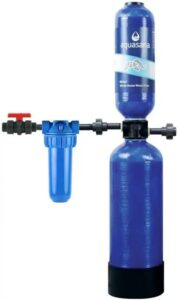
Aquasana’s Salt-Free conditioner is another good option if you want a budget model and have a small house or apartment.
It effectively reduces scale formation, and we love that it can upgrade to a combination softener and filtration system in one unit.
The only downside is it has a smaller hardness removal capability at 25 GPG, so it’s not ideal for very hard water or larger homes.
We like Aquasana’s no-salt conditioner because it’s a good budget option offering quality scale removal for smaller homes and medium hardness.
This unit uses scale control media (SCM) to alter the structure of hard water ions, making them unable to stick to household appliances and form scale. This means that when the softening component of this unit changes the mineral structure, it will pass through your water and into the drain without causing harm to your plumbing and appliances.
The system has a sediment pre-filter to catch debris, sand, silt, and rust. Then the nucleation-assisted crystallization softening media changes the structure of hardness-causing minerals as the water flows into your household pipes.
The best part about Aquasana’s salt-free water softeners is that you can make it a complete water treatment solution by adding a whole-house water filter and UV purification to eliminate hard water and contaminants in one device.
Some of the main features we like include the following:
The main features we love about this conditioner are the following:
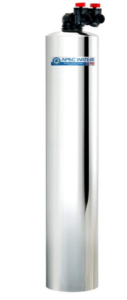
The APEC Futura is another quality, no-salt water conditioner for smaller homes with low to medium hardness. It has a lower max hardness capability at 25 GPG but maintains a quality flow rate and good water scale reductions for smaller hardness levels.
With the FUTURA-10, you’ll get significant mineral reduction and water hardness through the ceramic TAC technology while maintaining a reasonable pour rate, and you can also count on the carbon pre-filter to remove chlorine, and bad tastes, odors, and volatile organic compounds (VOCs) from your drinking water.
The main features we liked about this model include the following:
The main benefit of this salt-free water softening unit is the built-in carbon filter. Unlike the filter-softener combo systems, you still get the aesthetic advantages of carbon filtration without spending a fortune on a combo model.
This softener is ideal for those who want the best of both worlds on a budget.
With a GPG rating of 25, this system will also be best for those who fall under that water hardness level.
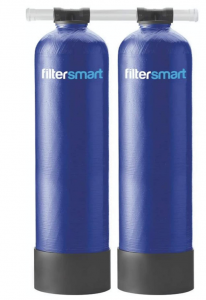
The Filtersmart FS500 makes our list because it offers quality scale prevention, a lifetime warranty, and a solid brand reputation. The only thing we don’t like about this model is the price point as it’s high priced compared to similar features from competing models.
The Filtersmart softener uses TAC technology to prevent most scale buildup without touching the flow rate, and it also has both sediment and granulated activated carbon (GAC) filters built-in.
After testing and reviewing this product, we found these main features to be the most notable:
If you want the added benefit of a GAC filter without paying full price for a combo system, then this is a great choice.
Likewise, this system won’t affect your water pressure if you have a large household with a higher GPM requirement.
Without knowing the GPG rating, it’s hard to guarantee this model will work on extremely hard water sources. It might be best to avoid if you have water with a GPG over 25, just in case.
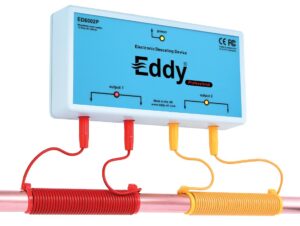
The Eddy Electronic Descaler made our list because we found that for the price point of around $200, this unit could provide decent effectiveness in scale reduction without using a tank or salt.
With a hardness capacity of 20 GPG, it’s not ideal for larger homes or very hard water, but if you are looking for a simple way to get some scale reduction with easy installation, it’s worth checking out.
After testing and installing an Eddy unit, we found that it was surprisingly not bad at offering a decent level of scale reduction for lower hardness levels of water.
The Eddy uses electromagnetic wave projection to alter the structure of hardness-causing minerals instead of trying to remove them completely.
Specifically, it takes deposits of hardness minerals away from the inside of pipes by an electronic wave that the device creates, preventing these minerals from sticking to appliances.
Some of the main features we liked about this product are the following:
Overall, we think this is an option to consider if you have lower water hardness levels of less than 25 GPG. If your water hardness is 20 GPG plus, we recommend one of our other models with a higher capacity.
We also found that it reduced scale formation, but not completely, so it will definitely help, but it may not get you the level of effectiveness you can get in a higher-quality system above.
See our complete Eddy Electronic Descaler review here.
Now that you’re familiar with the top no-salt system on the market, it’s helpful to know more about how they work and their other specifics to make an informed purchase.
A salt-free water softening unit does not use salt to remove hardness-causing minerals such as calcium and magnesium. Instead, it changes the structure of hardness-causing minerals, so they don’t form scale.
A traditional salt-based water softener uses a process called ion exchange to remove hardness-causing minerals. In contrast, a no-salt conditioner uses a process like template-assisted crystallization to change the structure of hardness-causing minerals so they don’t form scale on household appliances.
Unlike traditional water softeners or a salt-based system, a salt-free water conditioner’s media is not used up when conditioning your water, which is why most of these saltless water softener systems require minimal maintenance compared to having to refill the salt stores on a regular system periodically.
Many people complain that the water from traditional water softeners or salt systems has an unpleasantly slippery feel due to the added salt. Since there’s no salt added with no-salt water softeners, you don’t have to worry about your water feeling any different.
Also, no-salt water softeners don’t require electricity to function or waste water to flush their media, and they don’t pollute the environment with salt brine as salt systems do. They’re greener all around!
The only downside – in areas with extremely high GPG, a salt-based water softener is more effective at preventing scale.
Overall, the main difference is that salt-based versions actually remove hardness minerals while no-salt versions change the structure of minerals, so they don’t create scale formation on appliances.
You can also see our water conditioner vs. softener guide for more information.
Salt-free water conditioners are becoming more common because of their many benefits compared to salt-based versions.
Besides having a lot of benefits, water softeners that don’t use salt also have a few main drawbacks compared to traditional water softeners.
People seek an alternative to salt-based water softeners with low to moderately hard water. They don’t want to add extra sodium to their water supply while saving on maintenance and energy.
Salt-Free water softeners offer the following benefits compared to Salt Based Systems:
The only downside is that salt-free water softeners do not work well on hard water levels. If your water is not in the very hard range but is lower, you are an ideal candidate for a salt-free water softening system.
We will review a few leading technologies of saltless water conditioners below.
One of the best saltless water softener types is template-assisted crystallization.
How it works is water flows through a catalytic media, which causes all calcium and magnesium ions to crystallize. Hence, they stay suspended in the water instead of sticking to pipes and appliances.
It changes the hard minerals’ structure into microcrystals that don’t stick and cause scale. When implemented correctly, TAC has been shown to prevent scale buildup by 99%.
You may also see NAC as a process mentioned in a saltless softener. The main thing to remember is that nucleation-assisted crystallization is the same as TAC. Nucleation-assisted refers to the nucleation sites on the media beds inside the NAC media.
The process is the exact same as TAC, where water enters the tank and comes into contact with the media bed, where the hardness-causing minerals are changed into microcrystals which are then released back into the water supply where they won’t stick to appliances or pipes,causing scale.
Certain types of saltless softeners use chelating agents to soften water. Examples are the NuvoH20 unit which adds citric acid, and the Aquios water system, which uses polyphosphate.
Chelants, otherwise known as sequestrants, are created to bind to positively-charged metal ions like calcium and magnesium in aqueous solutions.
These softeners use a chelation agent to bind hardness-causing minerals to prevent appliance buildup. After reviewing these softeners, we think they can do an ok job on lower hardness levels, but they don’t work as effectively as TAC or regular salt-based models.
The last form of scale prevention is electromagnetic or units called water descalers. These units use electricity or plain magnets to alter the adhesive properties of calcium and magnesium by creating a magnetic field in the water supply.
The Eddy electronic water descaler, which we listed above, is a unit that uses this technology.
This technology can work slightly for lower water hardness levels, but we don’t recommend it over template-assisted crystallization units.
Salt-free conditioners are generally easier to install, operate and maintain than salt-based water softeners.
As mentioned, most can be installed DIY in front of your water heater without a plumber, though you should double-check to ensure this doesn’t void the warranty. And while you may be able to do it without a professional, depending on the size and weight of the tank, it may be easier to do it with someone with professional experience.
It’s worth noting that some water conditioners can be installed indoors or outdoors, while others are only rated for indoor use near the water heater. Ensure you put your water softener system where it’s meant to be; otherwise, you could face an untimely replacement.
Maintenance is also minimal, with most water softener systems requiring you to periodically replace the sediment or carbon pre-filters. This can usually be done in minutes without shutting off your water supply.
After dealing with many installations and purchases of saltless water conditioners, we recommend considering these before choosing your water softener system.
The quality and contaminants in your water can greatly impact your no-salt softener’s performance. For example, having a lot of iron, manganese, sulfur, or sediment in your water can damage the media and shorten the water softener’s lifespan.
This is why some saltless softeners contain a sediment pre-filter and carbon post-filter.
We think it’s important to get a water test done to determine if you have high amounts of contaminants and learn exactly how hard your water is. This will help you decide which water softener, filter, and no-salt softener combo is best.
You can see our water testing kit guide here.
Another key consideration is the technology used in the no-salt water softener. We discussed the main types above: template-assisted crystallization, chelation, and electromagnetic descaling.
After testing and reviewing many filters, we believe TAC or NAC is the best option for a no-salt water softener because it is more effective than chelation and magnetic descaling.
Chelation or magnetic descaling would be worth considering if you have low hardness levels and are looking for only budget options.
Determining the max hardness capability of the no-salt water softener you are considering is always important. For example, the Springwell Futuresoft and USWS Greenwave units offer 81 grains per gallon, just as effective as many salt-based units for softening water.
Other models have around 25 GPG hardness capacity, which is much lower, so you must understand what hardness capability you need for your water and find a unit that will get the job done.
One of the leading customer complaints regarding water softener systems is the impact on the water pressure (pour rate) from the faucet.
The flow rate will affect how you’re able to shower, wash dishes, do laundry, etc., so making sure the pour rate will be high enough to meet your family’s needs is a must.
Look for units with at least 10-15 gallons per minute flow rate ability.
To determine if a water softener system’s flow rate will meet your household’s needs, you must determine your expected GPM usage. To calculate it, you simply add up the GPMs of the individual appliances in your house.
These are the average GPM requirements for the most common fixtures:
| Appliance | Flow Rate (GPM) |
|---|---|
| Bathroom Faucet | 0.5 GPM |
| Kitchen Faucet | 0.5 GPM |
| Shower | 2.5 GPM |
| Dishwasher | 1.0 GPM |
| Clothes Washer | 1.5 GPM |
It’s important to look into how difficult it is to install the saltless water softener in your home, as hiring a professional will cost extra money. The good news is that most salt-free softeners are easier to install and maintain than salt-based ones.
Typically, most salt-free softeners will be relatively easy to install for people with DIY experience. They are also virtually maintenance-free, besides maybe replacing a sediment filter occasionally. Just make sure that this is the case with the one you choose.
Both the NSF and WQA offer certifications for water-softening systems.
Certification means a system has been extensively tested through these third-party labs, and the manufacturer’s claims have been verified for each standard.
Common certifications for saltless water softeners are NSF/ANSI 61 and 42, which means that the system’s components are not contaminating the water in any way and that aesthetic bad odors and tastes have been removed from the water, respectively while softening water at the same time.
You can see our guide here to learn more about the certification standards.
The best softening units always come with a lifetime warranty and guarantee period where you can get a full refund if you don’t like the product.
If you buy one of the top units with a lifetime warranty and money-back guarantee, you can rest assured that your hard-earned money won’t be wasted.
Your budget will dictate the price point you want to go with. Find the best water softener model for the money based on competing brands.
We’ve done most of this work for you when we tested and reviewed each brand based on critical factors, but you need to choose the softener that fits your budget and needs best.
You will know if your saltless water softener works by examining your home appliances to see if the scale formation is reduced after a few weeks. It’s impossible to do a water test in this situation because salt-free units do not remove the minerals but change their structure, unlike salt-based water softeners.
If you live in an area with very hard water or don’t mind maintaining a salt system, opting for a salt-based water softener is a good choice.
Salt-free water conditioners will provide you with less scale formation on your home appliances, better overall water quality, and longer appliance lifespans, all while leaving in beneficial minerals that the traditional saltwater softening process takes out.
A salt-free water softening system offers all of the benefits of conditioned water. These include increasing appliance lifespan, preventing water spots and scale buildup, saving money while requiring less maintenance, and running greener than a traditional water softener.
The Springwell FutureSoft is our choice for the best salt-free water softening system due to its high scale prevention percentage, minimal impact on flow, and lifetime warranty.
No matter which system you purchase, you should ensure it will meet your home’s needs.

15657 N Hayden Rd #1162
Scottsdale, AZ 85260
United States
602-780-2598
© Filtered Water Guide
Filtered Water Guide is a participant in the Amazon Services LLC Associates Program and other partner programs, which are affiliate advertising programs designed to provide a means for sites to earn advertising fees by referring users to merchant stores.