Filteredwaterguide.com is supported by readers. If you purchase through referral links on our site, we make a commission at no extra cost to you. Learn more.
Home » Reverse Osmosis Systems » 12 Best Reverse Osmosis Systems Reviewed
Are you in the market for a reverse osmosis system to get purified water in your home?
If so, you’re likely wondering which water purification system is the best option for your home.
In this post, we’ll take a look at some of the most popular reverse osmosis systems on the market and compare their features to give you the best possible drinking water without having to buy bottled water.
We’ll also discuss what to consider before making a purchase and share our top picks for the best reverse osmosis systems. Stay tuned!

When choosing the best reverse osmosis system for your home, these are the main things you should consider before making a purchase:
All reverse osmosis systems are going to greatly reduce the amounts of:
The main difference between reverse osmosis water filtration systems is the exact percent of the contaminants that they filter out. Most RO filters alone will remove between 95 and 98% of contaminants.
Some systems will also come with carbon pre and post-filters that help filter out even more impurities like volatile organic compounds (VOCs).
All reverse osmosis filters are going to impact your flow rate and/or water pressure, but reverse osmosis systems tend to slow it down the most. This is due to the high level of filtration, but low flow rates or water pressure are one of the most common customer review complaints about RO systems.
Reverse osmosis systems also generate wastewater by design. Every time the membrane is washed, contaminants that have built up over time are flushed away with additional water, and an RO system generates 4 gallons of waste for every 1 gallon of fresh water. The best reverse osmosis system will maximize flow while reducing water.
Most reverse osmosis water filtration systems themselves last 10-15 years, the filter cartridges last 12-24 months, while carbon filters usually last 6-12 months.
Although most RO systems have simple filters like a sediment filter that are readily available and quickly replaceable, you’ll want to double-check the ease of installation before purchasing.
Permeate refers to the filtered water that the reverse osmosis filters produce, and a penetrating pump works to push that water into the storage tank.
This achieves two things:
When the penetrating pump is removed, there’s less pressure on the reverse osmosis water filtration system since less water builds up on the penetrating side. This allows the movement of water across the membrane more efficiently, which reduces the wastewater needed and allows the membrane to remove harmful contaminants more effectively for purified drinking water instead of bottled water.
The TDS (Total Dissolved Solids) or harmful contaminants that these systems remove during the purification process include minerals like sodium, calcium, and magnesium. While these can be problematic in large quantities, removing too much of them makes your water both acidic and potentially less tasty.
Reverse osmosis water filtration systems with an alkaline remineralization filter introduce some of these minerals back into the water after they’re filtered out to improve the drinking experience without having to buy bottled water.
Reverse osmosis filters in general can be certified through both NSF and WQA for different standards, but RO systems have their own special certifications they can get, including the NSF/ANSI 58 standard. Certification by one of these third-party testers is an added assurance that your RO filter will do what it claims to.
The initial expense of your reverse osmosis water filtration system will be an upfront investment, but replacing the filters may add up in the long run. If you acquire a system that needs a plumber, you’ll also have to budget for the cost of installation.
Using our evaluation criteria from above we have determined which RO filters are the best on the market with these reverse osmosis system reviews.

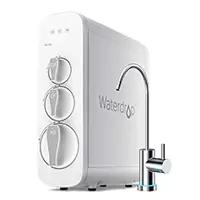
The Waterdrop G3 RO filters are the strongest reverse osmosis water filter system on the list, providing an impressive 400 gallons of purified water per day (GPD) – which is more than 5x the normal production of an RO system.
Its 7-stage water filtration system with carbon filters is NSF certified, and this reverse osmosis water filter is one of the few that lacks a water tank and fits nicely under your sink. This compact, tankless design means your water is filtered on-demand.
You’ll also find that these systems come with:
We highly recommend this sink reverse osmosis system as our top pick overall because of its high capacity, high-tech, and excellent design.
The Waterdrop G3 is ideal for anyone looking for a tankless option featuring a strong filtering performance, simple installation, quick water filtration rate, lower water waste, smart leakage detection, and a faucet featuring smart technology.
See our full Waterdrop Filters Review here for more information.

The NU Aqua Tankless RO system is one of the best filters on the market, it is compact and has no storage tank.
This is because of its standout waste water ratio of 2:1, a flow rate of 600 gallons per day, and an RO membrane lifespan of 3 years or 36 months.
It comes with 3 highly effective filtration stages including a sediment and carbon filter, a granular carbon filter, and the RO membrane filters to remove 99% of all contaminants.
With the efficiency ratio, gallons per day output, and the ability to remove 99% of contaminants including VOCs, chlorine, hardness, chemicals, heavy metals, and microorganisms this is one of the best reverse osmosis filtration systems you can find for purified water.
The NU Aqua is a very efficient tankless under-the-sink reverse osmosis system if you’re looking for a great unit comparable to the Waterdrop.

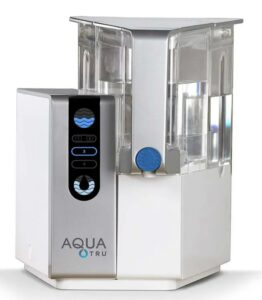
The Aquatru is the best countertop reverse osmosis system that is certified to NSF standards and removes 99% of contaminants including lead, chromium-6, fluoride, PFAs, nitrates, and much more.
It contains a 4 stage advanced purification system that includes a mechanical pre-filter, activated carbon pre-filter, high-efficient reverse osmosis membrane, and an activated coconut shell carbon VOC filter.
This osmosis water filtration system has some of the best technology including
If you’re looking for an effective RO system that looks good on your countertop then this is the top model to consider.
If you want a very effective, nicely designed countertop reverse osmosis system instead of an under-sink model this is your pick.
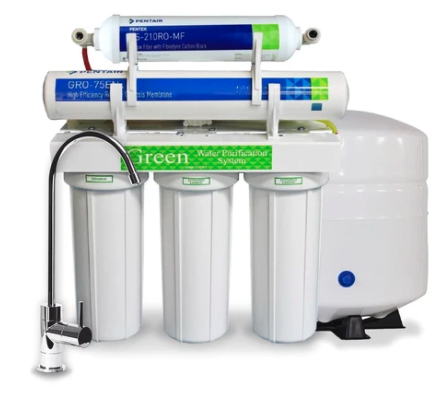
Working as a family-owned business since 1990, Quality Water Treatment features the SoftPro Green Reverse Osmosis System. This unit can remove up to 96% of the impurities in your home’s water, however, it only has a 1:1 waste ratio. That’s approximately two-thirds lower than competing models.
While starting with the 5-micron sediment filter, this sink reverse osmosis system features 5 stages. The remaining four include two coconut shell-activated carbon blocks, an RO membrane, and a carbon post-filter.
We like this system because it eliminates up to 96% of organic and inorganic contaminants while adding back healthy minerals when producing up to 75 gallons of purified water daily which is pretty good.
This osmosis water filtration system is budget-friendly, easy to install, and removes 96% of contaminants at a 1:1 waste water ratio.

Opting for the Home Master TMAFC-ERP under the sink reverse osmosis unit means your water goes through seven water treatment stages that filter, purify, and enhance your home’s water while taking out up to 98% of the water’s impurities.
This unit also improves your water’s taste during its remineralization process. With its highly efficient design, you’ll find a non-electric penetrating pump built-in to reduce wasted water by up to 80%. It also helps increase your home’s filtered water production by up to 50%.
The Home Master system is one of our top picks because of the high-quality filtration process. This unit’s water remineralization function has a patented two-stage process, and it also features a penetration pump.
The Home Master TMAFC-ERP system is an excellent choice if you want a standard under-sink reverse osmosis system with a storage tank that produces purified water fast and includes water remineralization at an affordable price.

While maintaining its status in the water treatment industry, the Pelican 6 Stage RO system is compact and eco-friendly. This six-stage reverse osmosis system takes 95% of harmful chemicals and other impurities from your home’s drinking water and also incorporates demineralization in the filtration process.
While filtering a maximum of 50 gallons daily, this unit also produces a 30% higher flow rate than traditional RO systems. As a product of the USA, this unit steps above its competitors regarding efficiency and maintenance.
We like this RO system for its high percentage of contaminant removal, the incorporated remineralization, its higher flow rate, and the lower amount of water waste generated.
If you are looking for a reverse osmosis system that is NSF/ANSI certified and includes water demineralization in the filtration process, this system from Pelican is an optimal choice.

The Aquasana OPTIMH20 reverse osmosis system is one of our top recommendations. It’s one of the only filters to combine reverse osmosis, Claryum filtration, and water remineralization in one system.
That means it filters all the contaminants from your water while also putting back in healthy minerals that the reverse osmosis process removes.
Aquasana was the first in the industry to develop a reverse osmosis product featuring remineralization technology. This unit also filters five times more water contaminants than standard reverse osmosis systems.
We recommend the Aquasana OPTIMH20 because of its high contaminant removal percentage and incorporated remineralization system.
This system from Aquasana is an excellent option if you’re looking for a reverse osmosis system containing superior water filtration plus demineralization for your purified water.

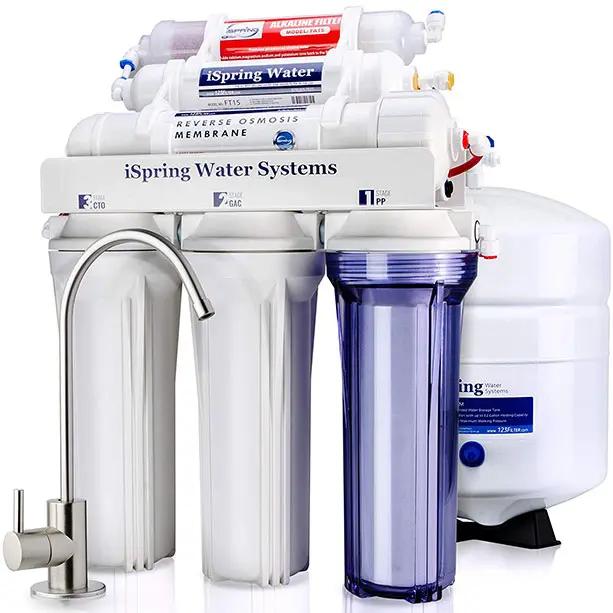
The iSpring RCC7AK is our #6 pick because it successfully eliminates up to 99% of over 1,000 impurities in the water.
The iSpring unit features a five-stage RO filtration system that’s incredibly effective and it also has the sixth stage for demineralization which makes this a great filtration solution for your drinking water.
The iSpring system is a reliable water filtration pick for the budget-conscious who wants to buy from a reputable company that’s been in the water business for a while.
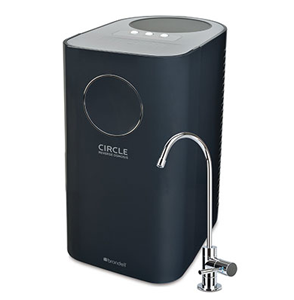
The Brondell H20 system made our list due to its efficiency and innovative technology, saving water, and making it ten times more efficient than other systems.
What’s surprising about this model is that its efficiency doesn’t involve using a penetrating pump. Instead, the system features a patented smart valve, and its reservoir’s exclusive circular design increases the efficiency of the filtration process.
Despite having these technological advancements, this unit has an incredibly small footprint meaning there will still be plenty of storage space beneath your kitchen sink. Because of its attractive design, many believe that it could have been a countertop unit.
The system is a decent reverse osmosis system with average filtration, no water demineralization, and its nice design fits under your kitchen sink well.
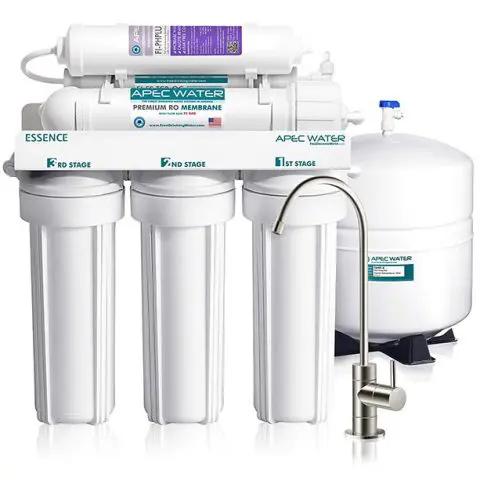
The APEC Ultimate made our list because it offers outstanding, six-stage reverse osmosis filtration. We also like its water remineralization, WQA gold seal certification, and business reputation. It’s a reliable reverse osmosis system at a fair price.
Overall, this is another solid choice. The system gets the job done well with a standard tank and faucet, but it doesn’t have a sleek design or many bells and whistles.

A budget system, the Express Water RO5DX5, provides high-quality filtered water at a discounted rate.
Although it only features a 5 stage reverse osmosis process and no penetrating pump, it effectively removes all types of contaminants from the water coming out of your faucet.
If you are looking for a budget option, this system from Express Water is one to consider.
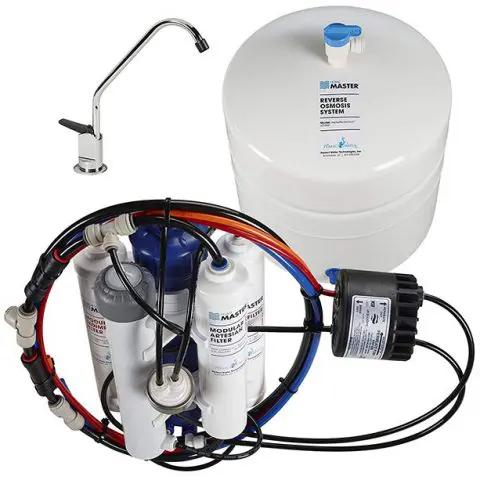
The Home Master TMHP HydroPerfection is one of the few filters with a UV light, making it suitable to use with more water sources.
The UV filter kills 99.8% of microorganisms that may be present in your natural water source. These reverse osmosis water filters also have nine-step filtration, making them one of the most effective filters for purified water.
If you’re looking for a top traditional reverse osmosis system with a tank, then this system is one to consider. It has 9-stage filtration, which is one of the most effective on the market, and it wastes smaller amounts of water compared to some RO systems.
| Model | Waterdrop G3 | SoftPro Green | Home Master TMAFCERP | Pelican 6-Stage | Aquasana OPTIMH20 RO + Claryum |
|---|---|---|---|---|---|
| Our Rank | 1 | 2 | 3 | 4 | 5 |
| Contaminants Removed % | 94% | 96% | 98% | 95% | 95-99% |
| Output | 400 GPD | 75 GPD | 75 GPD | 50 GPD | 32 GPD |
| Wasted Water Ratio | 1:1 | 1:1 | 1:1 | 2:1 | 4:1 |
| Filter Lifespan | 6-24 mo | 6-12 mo | 12 mo | 6-18 mo | 6-12 mo |
| Permeate Pump | Yes | No | Yes | No | No |
| Remineralization | No | Yes | Yes | Yes | Yes |
| Certifications | NSF | No | NSF | NSF/WQA | NSF |
| Price | $$$$ | $$$ | $$$ | $$$ | $$($) |
Now you’ve read the reverse osmosis system reviews, how do you choose the single best reverse osmosis system for your home?
Before you start narrowing down your options, make sure that you clarify what a RO filtration system does. You should also understand why it is different from other reverse osmosis systems.
A reverse osmosis filtering system passes water through an RO membrane using pressure. With this technology, reverse osmosis systems can remove between 95 and 99% of contaminants from the tap water.
This makes a reverse osmosis membrane or RO filter more effective than any other membrane filtration method, including ultrafiltration, micro-filtration, and nano-filtration. You should replace that membrane every 2 to 3 years.

A reverse osmosis system is typically a “point of use” filter system, meaning installation occurs near a faucet. Most designs include an installation either on the countertop or under the sink to limit the use of bottled water.
They have a dedicated faucet that delivers potable water for drinking and cooking. By purchasing an extra line, you can also connect your system to your refrigerator for the water dispenser or ice maker.
Reverse osmosis water is free from all contaminants that come out of your faucet and could be damaging your health, even substances that can cause cancer. Your tap water might contain contaminants like:
A reverse osmosis water filtration system has a more comprehensive filtration level than a standard water filter that uses just carbon filter cartridges and sediment filters. A traditional water filter usually removes taste, odor, chlorine, chloramine, and other organic compounds and bacteria.
The RO filter systems remove all the contaminants from the tap water listed above, plus the ones that a standard filter removes as well.
One thing to make sure that you keep in mind is that reverse osmosis filtration is exceptionally effective. That means that these filter systems make water so pure that they remove healthy minerals from the drinking water coming out of your tap water. If having these beneficial minerals in your drinking and cooking water is essential to you, you should buy a filter that includes water remineralization.
Lastly, it’s important to note that an RO filter’s use is mainly a “point of use” under the sink reverse osmosis systems with a dedicated faucet. If you are looking for whole-house filter water, find our review on whole-home filters.
You may be curious if RO is a viable alternative for your entire-home system now that you know what it is. The problem: as mentioned, reverse osmosis becomes less and less efficient the larger you scale the system.
This means vast amounts of wastewater are generated, and very few companies incorporate RO into their whole-house systems. RO will give you great-quality purified water at your faucet, but for your other water needs, you’re going to be better off going with a different filtration system.
Yes, there are some larger commercial whole house RO machines that can be used for the whole house but the efficiency and waste are not good. Most people don’t need RO filtration for all the tap water in their home, just the drinking water.
Before picking the best system for your home’s purified water, there are a few criteria to consider.
To start, you need to assess how much room you have under your sink and/or on your countertop. It needs to be sufficient for the filters, reverse osmosis components, and (in most cases) the storage tank. It may be that you need to rule out a countertop system or an under-sink water system for lack of space.
For this reason, it’s essential to choose the level of filtration that best matches your purified water needs.
You need to know if your water is coming from a city supply or if it’s well water. That way, you can figure out which system could best remove the contaminants present in your tap water. You can find out what your water has in it by conducting a water test through a certified lab.
Your water may currently contain a large number of healthy minerals that the system can remove. If you want to regain these water minerals, you should pick a water system that offers water remineralization to add them back.
Even if you choose the most efficient reverse osmosis filtration system, it can waste some water. If you live in an area where water is scarce, wasting water may not be an option.
In this case, you should pick a filter other than reverse osmosis to purify your water. Otherwise, consider looking for the RO filter that wastes the least amount during the purification process and still offers quality filtration.
Most water reverse osmosis systems use water pressure to operate. Your home’s water pressure needs to be at least 40 PSI for the reverse osmosis filter process to work. If your home has low water pressure, find out if you can increase the pressure with a booster pump.
The price of an RO system typically ranges from around $200 to $550. In large part, the price depends on the quality and additional features of the reverse osmosis system. Most of our picks for the top reverse osmosis systems fall within the range of $200 to $600 for each model.
The amount of wastewater compared to purified water determines the water efficiency ratio for these systems.
The best reverse osmosis system usually uses a penetrating pump, which lowers the wastewater rate to 1:1 – meaning one gallon of water wasted for every one gallon of filtered water. Without a penetrating pump, a good ratio is 3:1.
Many of the top reverse osmosis systems come with additional accessories to improve the filter’s efficiency and increase water quality coming out of your home’s faucet. There are three main accessories that many reverse osmosis water systems come with:
You may come across unfamiliar terminology when reading the best reverse osmosis system reviews. Being clear about what each term means can help you determine which filter to use, select the ideal models for your home, and make the right buying decision.
All RO systems feature a relatively simple installation process. A countertop system is the most straightforward system of all, as they sit next to the faucet and don’t require significant plumbing installation. However, an undersink system means that you have to drill a hole into the countertop for the faucet during installation.
Under the sink systems typically come with a dedicated faucet or a separate attachment so you can use your existing faucet.
That means you may need the assistance of a plumber or handyman to complete the installation process so that you can use the faucet. If you prefer not to drill a hole in your countertop during installation, then these under-sink water reverse osmosis systems are not the optimal choice.
Rarely is any maintenance necessary after installation beyond the replacement of filters. Typically, a pre-and post-filter requires changing every 6 or 12 months and reverse osmosis filters every one to five years after installation.
The manual for your filtration system specifies installation instructions and how often you need to change the system filtration. You can utilize a TDS meter to check the filters you use, too.
Before you purchase an RO system, make sure you run a water test. That water test helps you determine the level of filtration your water requires and show you what types of contaminants are currently in your water supply.
If you find high levels of the contaminants named above in your water, the installation of an RO system is ideal. However, if the problem lies with chlorine, an adverse taste, or odors it would be wise to consider a standard carbon water filter.
Yes. These water treatment systems typically remove calcium, fluoride, iron, lead, manganese, and salt. The process eliminates minerals because their molecules are significantly larger than what’s in water.
No, there are differences between reverse osmosis vs distilled water. For example, reverse osmosis involves removing volatile chemicals and filtering water. Distilled water involves boiling water, capturing its condensation, and condensing it back into the water’s supply.
As of now, there are not any legal bans or regulations on reverse osmosis systems. You can see our article where we review reverse osmosis bans speculation here.
A reverse osmosis system is an excellent way to improve your home’s water quality. These systems are not only easy to install but also offer many benefits for your family.
After reviewing all of the best reverse osmosis systems above, we recommend a couple of standout filter options.
If you are looking for the best technology and highest filter GPD output, we recommend the Waterdrop G3 System as the top choice for your home’s water.
If you’re instead looking for the best countertop reverse osmosis system, we recommend the Aquatru.
If you have any questions about which system is best for your needs, please leave a comment below, and we will be happy to help you choose the perfect reverse osmosis system for your home.

David is an expert in all things plumbing, heating, cooling, and water treatment. He got his start in the plumbing business working on fixing all types of home improvement issues including water leaks, broken toilets, appliance installation, and more. Over time, he learned a ton about installing and choosing the correct water treatment products for homeowners.
15657 N Hayden Rd #1162
Scottsdale, AZ 85260
United States
602-780-2598
© Filtered Water Guide
Filtered Water Guide is a participant in the Amazon Services LLC Associates Program and other partner programs, which are affiliate advertising programs designed to provide a means for sites to earn advertising fees by referring users to merchant stores.