
Filteredwaterguide.com is supported by readers. If you purchase through referral links on our site, we make a commission at no extra cost to you. Learn more.
Home » Water Filtration Systems » 9 Best Fluoride Water Filters Reviewed
We know there is evidence that suggests that the consumption of too much fluoride can lead to several health issues.
The good news is, there are plenty of fluoride water filtration systems ranging from countertop units all way up to whole-house models.
Whatever type of fluoride filter is best for you within your budget, the water filtration systems reviewed below will be able to provide excellent high-quality tap water without harming your family’s bodies by eliminating those noxious chemicals that are now typical in most municipal water supplies.
You can see the best fluoride water filter in our guide below.





Even though fluoride water filters come in a variety of styles and use several different filtration methods, it’s possible to compare them using the same criteria: the amount of fluoride and other contaminants they remove, the filter capacity, filter life span, the filtration rate, certifications, and price in order to find the best fluoride water filter.
The best water filter is the one that removes fluoride as well as other contaminants in your water supply since no water supply contains only one type of contaminant.
By testing your water, you can find out exactly what harmful chemicals and contaminants it contains. Then, you can find a filter that will remove fluoride from water along with all those additional contaminants.
The most common water filtration systems that are effective for fluoride removal use reverse osmosis (RO), gravity, or special forms of carbon.
A fluoride filtration system with long-lasting filters will require less maintenance and ultimately cost less over the long term. It’s important to note that whereas some manufacturers publish the filter life in years, others show the capacity rating in gallons.
Capacity refers to the number of gallons of water a filter can process. For instance, 100,000 gallons is approximately a lifespan of one year for a whole-house fluoride water filter.
Flow rate describes the water pressure of filtered tap water, usually in gallons per minute (GPM). It’s important to find a water filter that’s effective at removing contaminants without decreasing flow too much.
The two main independent organizations that certify water filtration products in accordance with defined quality standards are the Water Quality Association (WQA) and the National Sanitation Foundation (NSF). Certification from either of these organizations increases the likelihood that a fluoride filtration system will meet its manufacturer’s claims.
Price is always a key consideration when comparing the best fluoride water filters. We have made sure that each of the models on our list offers great value for money.
In addition to the price of the filtration system itself, it’s necessary to consider future costs, such as replacement filters for removing fluoride.
In our search for the best fluoride filter (based on the points above), we’ve narrowed it down to the following options, due to their capability to provide you with fluoride-free water with water filters that remove fluoride and other contaminants.
This is not just the best under sink fluoride water filter system but the best water filtration system overall.
A three-stage under-sink fluoride filter from Clearly Filtered, removes up to 99.5 percent of fluoride from your water.
The first of the filtration stages is a premium carbon priming filter to remove chlorine, bad tastes and odors, cloudiness, volatile organic compounds (VOCs), and various chemicals. Stage two has the heavy metal and VOC filter, which removes metals like lead and chromium in addition to organic contaminants like herbicides and pesticides.
Finally, stage three of the multi-stage filtration process is the fluoride and arsenic filter. During this stage, the filtration system carries out fluoride removal and filters arsenic from your tap water using a proprietary filtration media.
This is one of the best sink water filters on the market – not only for fluoride but also for more than 232 additional contaminants. It’s best for those with a municipal water supply who can afford the yearly filter replacements.
See our complete Clearly Filtered 3 Stage Under Sink Filter Review here.
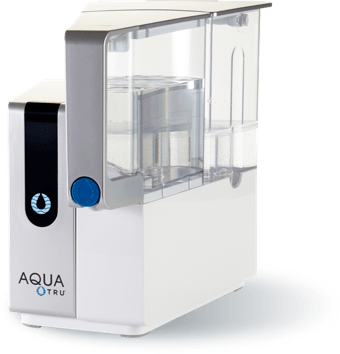
Another great option for removing fluoride from your tap water is using the Aquatru countertop reverse osmosis system.
This RO system removes 82 contaminants including fluoride, lead, chlorine, nitrates, and much more.
Just the fact that this is reverse diffusion filtration means this water filter can remove 99% of total dissolved solids.
Another benefit of this system is that it doesn’t require any installation. You just have to plug it in and fill the storage tank with tap water and it’s ready to go with fluoride-free water.
This RO system contains a 4 step filtration process that all the major bottled water brands use:
Lastly, the filters in this RO unit last longer than normal lasting for 600-1200 gallons of water or around 6 months to 1.5 years.
It’s an awesome fluoride filter if you are looking for a countertop model.
If you’re searching for the best fluoride water filter that will fit on your countertop and is simple to use, this is the best option.
The filtration quality is excellent and has filters that remove fluoride from your drinking water and improve water quality.
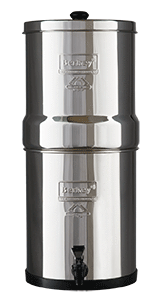
This countertop fluoride filter system uses gravity filtration to remove more than 200 contaminants. Unfiltered tap water flows from the upper chamber of the countertop filtration system through a carbon composite and proprietary media blend. The result is pure water in the lower storage container.
The Big Berkey system has a 2.25-gallon storage capacity and is made with BPA-free parts. It is suitable for households made up of two to four people. To remove fluoride, you’ll need to purchase a separate fluoride filter for the standard countertop filter. However, when it has a fluoride filter, the Big Berkey is one of the best countertop water filters for fluoride on the market.
This is the best countertop water filtration system for removing fluoride. In addition, it’s effective at removing a wide variety of additional contaminants. Berkey is a top brand, meaning you can trust that this system removes all the contaminants the company claims it does.
If you don’t want to install a whole-house filter or an under-sink filter, a fluoride water filter pitcher can be a great alternative for fluoride removal.
This Clearly Filtered pitcher uses three-stage filtration with a mesh screen, a granulated activated carbon stage, and a proprietary blend of seven filtration materials to remove over 232 contaminants, including fluoride.
This is a great choice for those who want excellent fluoride filtration for their drinking water without needing to install anything to the cold water line. Despite the slow filtration rate, this is one of the best water filter pitchers on the market.
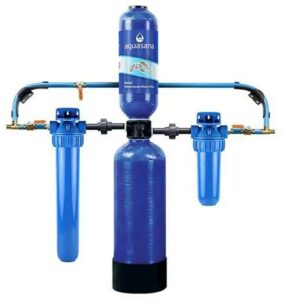
Winning the silver medal in this whole-house filtration system from Pelican. Since regular block and granulated activated carbon filters cannot remove fluoride, Pelican uses a calcium-based carbon filter called bone char in addition to a sediment pre-filter.
The whole-house water filter features high-quality tanks and valves covered by a limited lifetime warranty. Pelican also prides itself on using a non-electric and zero-water waste design, which is environmentally friendly and doesn’t require much maintenance.
This whole-house filter is a great choice for any home receiving municipal water that contains fluoride, chlorine, and chloramine. It’s a particularly excellent solution if you only need basic filtration, to improve the taste and smell of your water. You can rest assured that all of your water — including your drinking water — is fluoride-free.

The OPTIMH20 under-the-sink reverse osmosis fluoride filtration system from Aquasana is a top choice for two reasons. First, it’s affordable. Second, it removes 95 percent of fluoride as well as 87 common contaminants.
This four-stage RO filtration system uses activated carbon, a 1-micron RO membrane, and a Claryum block filter, which combines activated and catalytic carbon along with ion exchange and sub-micron filtration. The remineralization stage returns some of the healthy minerals that the RO filtration system removes from your drinking water and raises the pH of the water.
This is one of the most effective RO system filters that remove fluoride. It also removes a variety of other water impurities. The system has a variety of NSF certifications, including one specific to RO filters, and it is available at a great price.
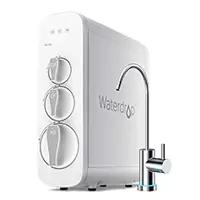
The Waterdrop G3 Reverse Osmosis System is one of the best under sink fluoride water filters for drinking water.
This unit is NSF 58 and 372 certified, and it removes 95% of total dissolved solids as well as fluoride and many other contaminants from water.
One of the best features of this system is the 400 gallons per day fast water flow that ensures you get purified, filtered water instantly which is a huge plus with an RO system.
The unit contains a 7-stage filtration process including a pre sediment and carbon filter, a 3-layer dow membrane RO filter, and a post-filter carbon block.
Lastly, this is a sleek tankless design that comes with the best technology possible in a sink water filter system.
If you’re looking for a high-tech under sink tankless reverse osmosis filter that removes fluoride and other contaminants and are not concerned about paying for quality this is the model for you.
The Megahome countertop water distiller is an alternative option to reverse osmosis or standard filter type.
A distiller works by boiling water to 212 degrees and then recondensing the water into pure h2o which removes fluoride and most other bacteria, viruses, and contaminants in the water.
Distillers are usually used for medical applications and other uses that need the purest form of h2o possible without any impurities.
This unit from Megahome contains a distiller and an activated carbon filter to make the drinking water taste better after it’s done being distilled. It completes 1 gallon of distilled water every 5.5 hours and is made out of stainless steel for durability.
While a distiller is not as efficient as a typical water filter for producing drinking water it’s another option to consider if you need to remove fluoride from water for other uses
If you need to remove fluoride for a medical application or are using the distiller for producing a smaller amount of totally pure water then this is a good option.
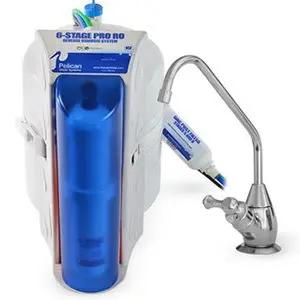
The Pelican Under Sink 6-Stage RO water filter delivers high-quality drinking water by sending unfiltered water through a reverse osmosis membrane and five other stages.
The first four stages are combined into one filter cartridge and include a sediment filter for large particles, an RO pre-filter, a carbon filter, and the reverse osmosis membrane itself.
The last two stages are combined in a second cartridge. Water passes from the tank and through a carbon post-filter and a remineralization stage.
This is a great fluoride reduction system for those who want to spread the costs out over time and still receive high-quality water filtration. This RO system uses 50 percent less water than other RO systems, meaning it produces less overall waste, and the faucets come in three finishes to match your kitchen sink.
| Product | Fluoride Removed | Filter Lifespan | Certifications | Price |
|---|---|---|---|---|
| Clearly Filtered Under-Sink System | 99.5% | 9-12 months | NSF certified for 5 standards | $$$ |
| Aquatru Countertop RO | 99% | 1-2 years | NSF Certified for 5 standards | $$$ |
| Big Berkey Gravity Filter | 97% | 2-5 years | NSF certified for 2 standards | $$ |
| Clearly Filtered Water Pitcher | 98.2% | 4 months | NSF certified for 5 standards | $ |
| Pelican Whole-House Fluoride Filter | 100% (under 1ppm) | 3-5 years | NSF certified for 2 standards | $$$$ |
| Aquasana OPTIMH20 RO + Claryum | 95% | 6-12 months | NSF certified for 4 standards | $$ |
| Waterdrop G3 RO System | 95% | 6-24 months | NSF Certified for 2 standards | $$$ |
| Megahome Countertop Water Distiller | 99% | Distillation device | NA | $$ |
| Pelican 6-Stage RO Under-Sink | 93.8% | 18 months | WQA certified for 1 standard | $$ |
At 0.054 percent, fluorine is the thirteenth most abundant element on Earth, ranking even higher than carbon.
In its elemental state, fluorine is a noxious yellow-green gas, but it’s most commonly found in its ionic form: fluoride.
This form combines with other elements like sodium to create substances such as sodium fluoride.

Fluoride occurs naturally in the air, soil, plants, and groundwater, although it is most prevalent in saltwater.
Whereas fluoride can certainly be present in your water supply naturally, it is commonly added in trace amounts (less than 1 ppm) to municipal water supplies in a process called fluoridation. This is to help ensure that people receive enough fluoride daily to promote tooth health.
Fluoride is slightly controversial because it has been associated with both positive and negative health effects.
For example, there was a 68 percent decrease in the average number of missing or decaying teeth in 12-year-olds after fluoridated water was introduced in the U.S. between the 1960s and the 1990s.
This is because fluoride in small amounts can rebuild weakened tooth enamel, prevent tooth enamel from losing minerals, reduce tooth decay (or even reverse tooth decay that already exists), and prevent harmful oral bacteria growth.
On the flip side, too much fluoride can cause:
Mild dental fluorosis just leads to white spots on tooth enamel, but severe dental fluorosis causes pits and other damage to the enamel. Skeletal fluorosis causes joint pain and stiffness and, in the case of prolonged exposure to very high doses of fluoride, can eventually progress to the calcification of ligaments.
Although fluorosis is most commonly caused by swallowing toothpaste (which you can prevent by using fluoride-free toothpaste) or exposure to excessively high amounts of fluoride in the water (over 2 ppm) over a long period of time, many people would rather not take any risks.
Fluoride can be harmful in excessive doses and an extreme amount of fluoride can cause poisoning in very rare cases.
Fluoride may also be found in a variety of over-the-counter and prescription products, including:
The good news is the US regulatory system for fluoride in water provides great protection against toxicity so you don’t need to worry too much about fluoride poisoning from municipal sources.
There are several types of filtration systems that remove fluoride from water. These range from five-stage whole house filters that you install on your existing water line to point-of-use filters that you either attach to your kitchen sink faucet or that sit on your countertop.
Fluoride reduction filtration systems fall into four main categories:

When considering the effectiveness of a filter, though, the filtration method is more important than the filter type.
For example, a regular activated carbon filter is ineffective for fluoride reduction. This means that if you compare under-sink water filters that use a regular granulated activated carbon filter and one that uses bone char, the one with bone char will remove the fluoride to a much greater extent.
The main filtration methods that are effective for fluoride reduction are:
Reverse osmosis systems use pressure to force water across a semipermeable membrane. The reverse osmosis filters have pores that are large enough for water molecules to pass through, but other contaminants – including fluoride – are trapped by the filter. This method of water filtration is common in point-of-use systems like under-sink filters, but it is too inefficient for a whole-house filter.
Bone char acts as an ion-exchange filter medium to remove fluoride from water. It does this by swapping fluoride ions in your drinking water for the calcium ions in the bone char.
Activated alumina removes fluoride by adsorption. The fluoride ions are trapped on the surface of the activated alumina. This method is also effective at removing arsenic and selenium from unfiltered water.
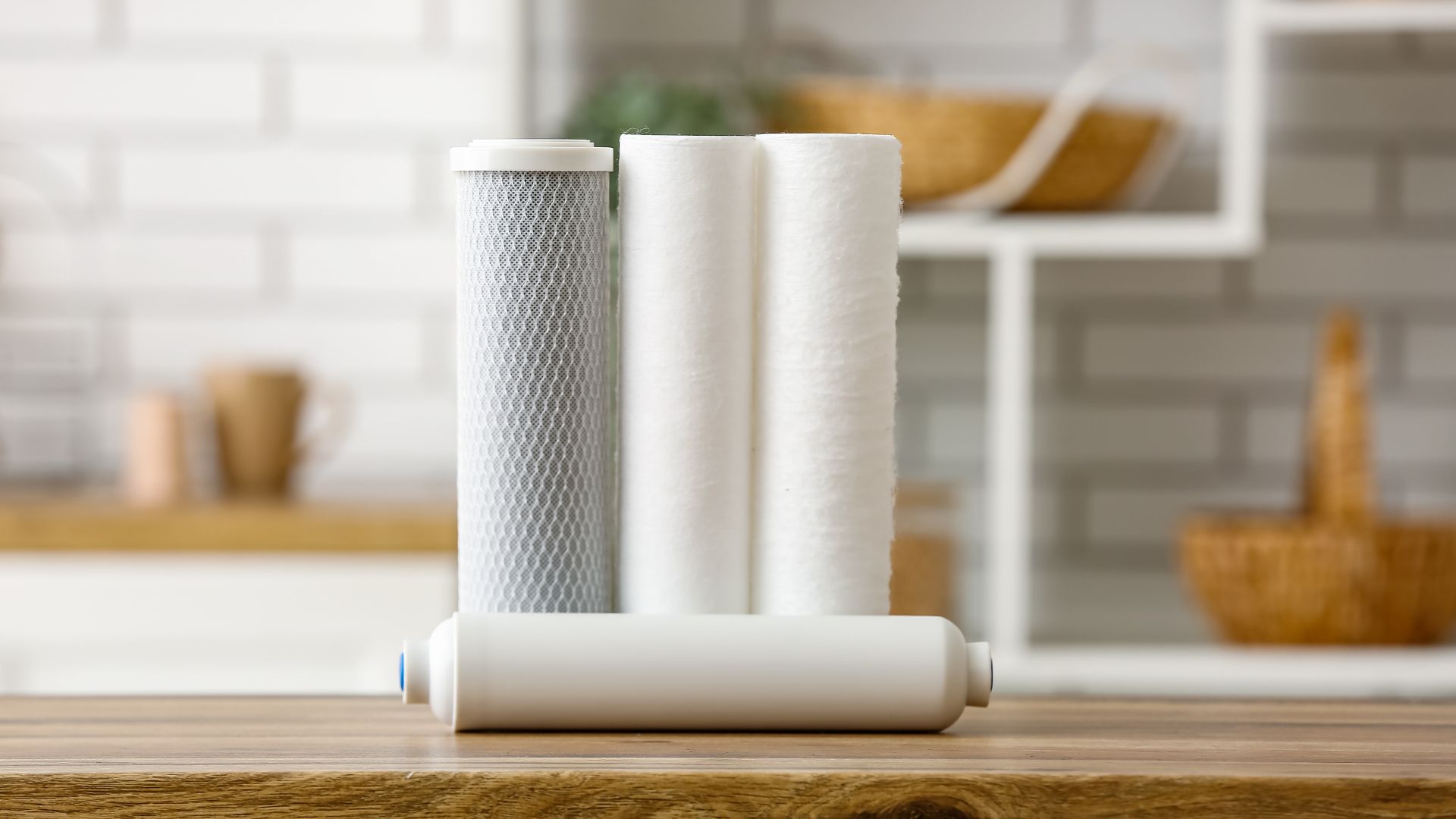
Whereas some manufacturers like Pelican use bone char exclusively to remove fluoride from drinking water, you’ll often see products that use a “proprietary blend” of media.
This means that the manufacturer uses a multifaceted system of water filters that uses a combination of materials the manufacturer has tested and developed. These proprietary blends don’t fall strictly into any one category.
For example, a proprietary blend may incorporate both bone char and activated alumina or it may be a substance that uses ion exchange, adsorption, or another filtration process to remove fluoride from drinking water.
When assessing water filters, we took five main criteria into account: the amount of fluoride and other contaminants they remove, filter life, flow rate, certifications, and price.
Whereas this gives you a good baseline to compare the quality of different water filters, there are other factors that will help you determine if a particular system is a good fit for your home’s filtered water.

If you receive municipal water, the likelihood is your drinking water is fluoridated.
However, fluoride concentrations are much more variable in well water. You’re also likely to have a different subset of contaminants with a well.
Conducting a water test will show you what contaminants are present in your drinking water and in what amounts. This will help you pick a filter that is effective for filtering water both for fluoride and other impurities.
Find a water testing kit that meets your needs by checking our review of the best kits.
If you’re looking at filters that require installation, such as whole-house filtration systems or an under-sink fluoride filter, you should check in advance if it is easy to install. If a plumber will need to install the filtration system, this will add an extra expense. Bear in mind that installing a filtration system yourself may void the manufacturer’s warranty.
Similarly, consider how easy it is to maintain the filtration system. Some systems require you to change the filter cartridges as often as every six months. If switching the cartridge is difficult, you may prefer to choose a different system. Keeping a filter cartridge in longer than recommended will diminish your water quality.
If you’re living in an apartment or dorm room, your filtering needs are significantly different than those in large households with high water usage. For example, if you’re single and living in a small home, you may find that 100 gallons per day are sufficient. In a larger household, however, you may need a filter with a much higher capacity for filtered water.
There are also major differences between water filter pitchers and large-scale whole-house systems. If you receive well water, whole-house water filters are likely necessary for filtering contaminants other than fluoride. Those with a municipal water supply, however, have more choices.
What you choose will depend on the contaminants in your water besides fluoride and whether you just want to filter your drinking water or you also want purified water to wash clothes, wash the dishes, and have a fluoride shower filter as well.
A: You can check with your local municipality or water supplier. If you have a well, you’ll need to have your water tested to determine the fluoride levels.
A: If you’re looking for a cheap way to filter fluoride from your water, we recommend getting a water filter pitcher. These typically cost around $30-40 and can filter up to 100 gallons of water before needing the filter replaced.
A: Yes, you’ll need a filter that’s specifically designed to remove fluoride from well water. In addition to fluoride, your water may also contain other contaminants like lead, pesticides, and chlorine. Depending on the levels of these contaminants present in your drinking water, you may need a different filter to remove them.
A: Yes, reverse osmosis is an effective way to remove fluoride from your water. However, these systems can be expensive and require frequent maintenance.
A: Many manufacturers publish the percentage of fluoride their filter removes based on their own and independent testing. To be completely sure water filters work as advertised, look for systems that have been certified by the NSF, WQA, or other independent organizations.
A: There is currently not a fluoride shower filter specifically available. Nonetheless, if you purchase a whole-house filtration system, it will reduce fluoride from the filtered water that comes out of your shower.
A: Fluoride toxicity depends on the levels of fluoride in your drinking water. When fluoride is less than 1 ppm, it is safe to drink water. In fact, fluoride at these levels has positive effects on tooth enamel. However, drinking water with more than 2 ppm of fluoride for an extended period of time can cause fluorosis
Our pick for the best fluoride filter overall is the Clearly Filtered Under Sink Unit, thanks to its fantastic filtering capabilities and high capacity.
Another good option is the Pelican Whole House Filter, which is also our choice for the best point-of-entry system.
The Aquasana OPTIMH2O system is a more affordable alternative to the Clearly Filtered model.
The Big Berkey is the best countertop gravity filter for fluoride, whereas the Clearly Filtered Water Filter Pitcher is the best-filtered pitcher.
It can be difficult to determine which fluoride water filter is the best for your home, especially since there are many options, including whole-house units, under-sink systems, pitchers, and countertop units.
Once you know your home’s filtration needs, you’ll be able to determine which type of filter will be a good fit.

15657 N Hayden Rd #1162
Scottsdale, AZ 85260
United States
602-780-2598
© Filtered Water Guide
Filtered Water Guide is a participant in the Amazon Services LLC Associates Program and other partner programs, which are affiliate advertising programs designed to provide a means for sites to earn advertising fees by referring users to merchant stores.